
Small Garden Ideas for High Wycombe Townhouses and Terraces: Light, Privacy and Clever Layouts
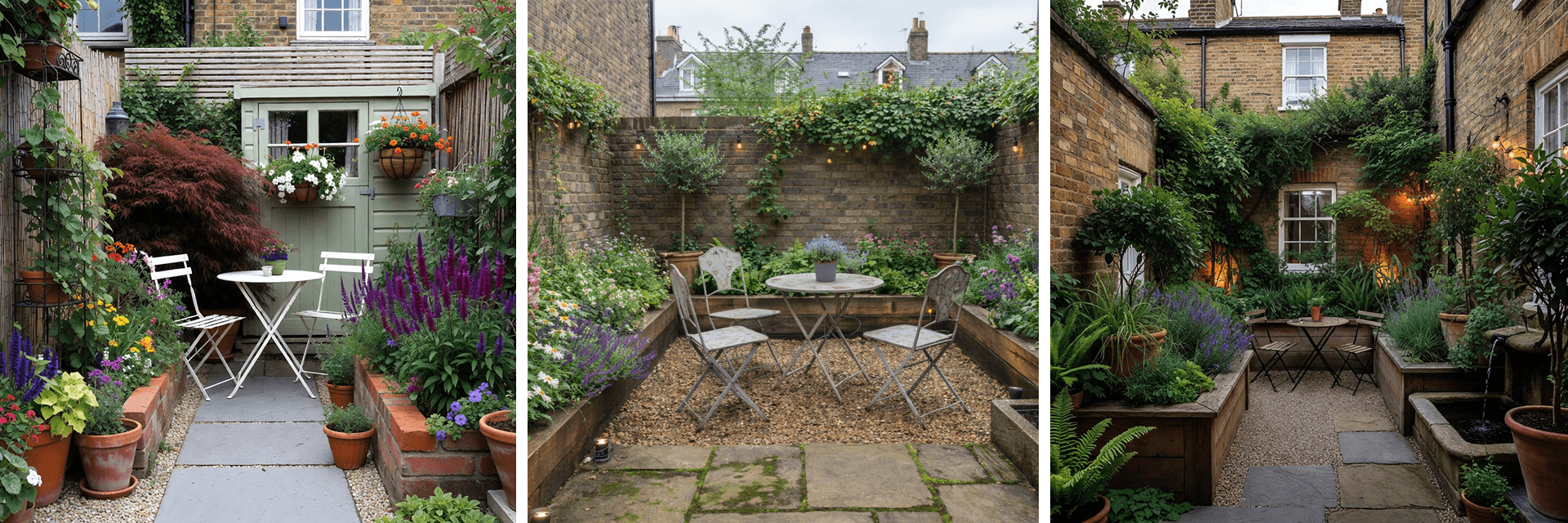
Townhouse and terrace gardens in High Wycombe often come with the same set of challenges. They are compact, closely overlooked, and shaped as much by neighbouring buildings as by the plot itself. Light can arrive in short bursts rather than all day, and ground conditions are rarely ideal after years of development and foot traffic. Yet these gardens also have huge potential. With thoughtful layout and planting, even a modest space can feel calm, private, and genuinely useful throughout the year.
The key is to stop treating a small garden as a scaled-down version of a large one. Instead, it works best when every element earns its place, and when planting and structure are chosen to suit real conditions rather than idealised ones.
Understanding your garden before making changes
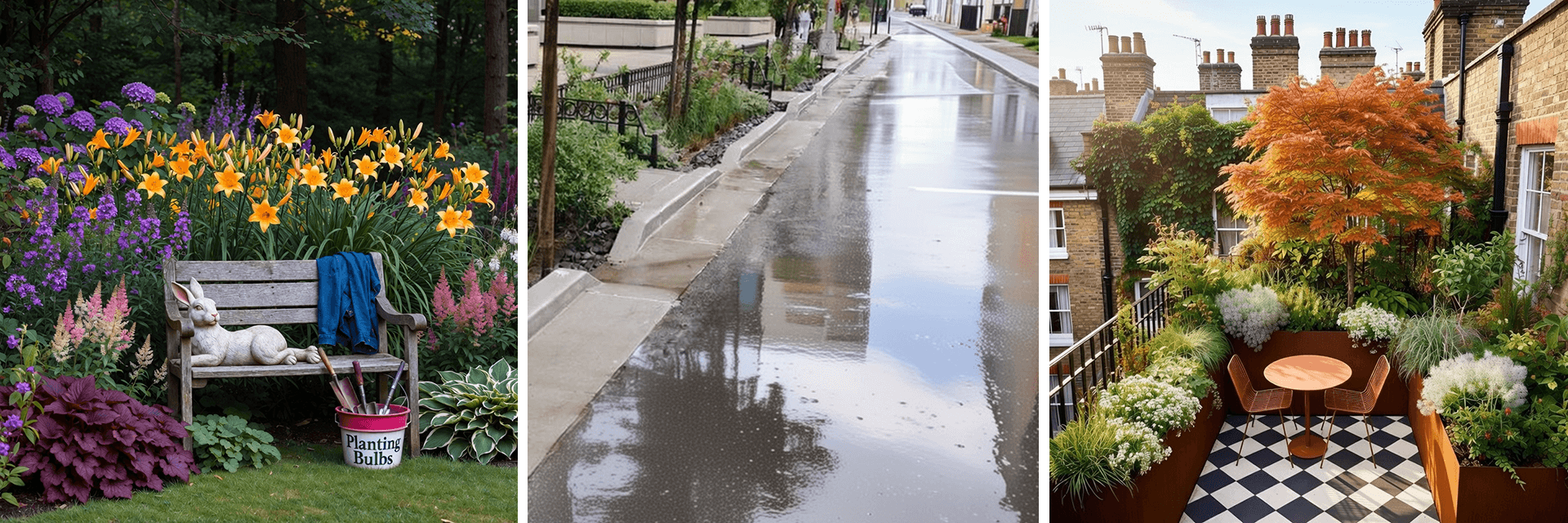
Before making changes, it helps to observe how light, water, and space behave in real conditions, not just how the garden looks on a good day.
Many problems in small townhouse gardens start with assumptions. A space that looks sunny at first glance may only receive direct light for a short part of the day. Another might drain well in summer but stay stubbornly wet through winter. In High Wycombe, it is also common to find compacted soil or mixed ground where building work has taken place, which has a big impact on plant health.
Taking time to understand the garden as it actually behaves can save a lot of frustration later. This is especially important in small spaces, where one poor decision can dominate the whole plot.
A simple assessment makes a real difference
Note where sunlight falls in the morning, early afternoon, and evening across a couple of typical days
Watch how the garden drains after heavy rain and where water lingers
Stand or sit where you would naturally spend time and observe which neighbouring windows overlook that spot
Decide what the garden is mainly for, whether that is eating outside, quiet relaxation, growing plants, or a combination
This approach helps shape decisions about layout and planting, rather than forcing the garden to fit an idea that does not quite work on the ground.
Layout choices that suit narrow plots
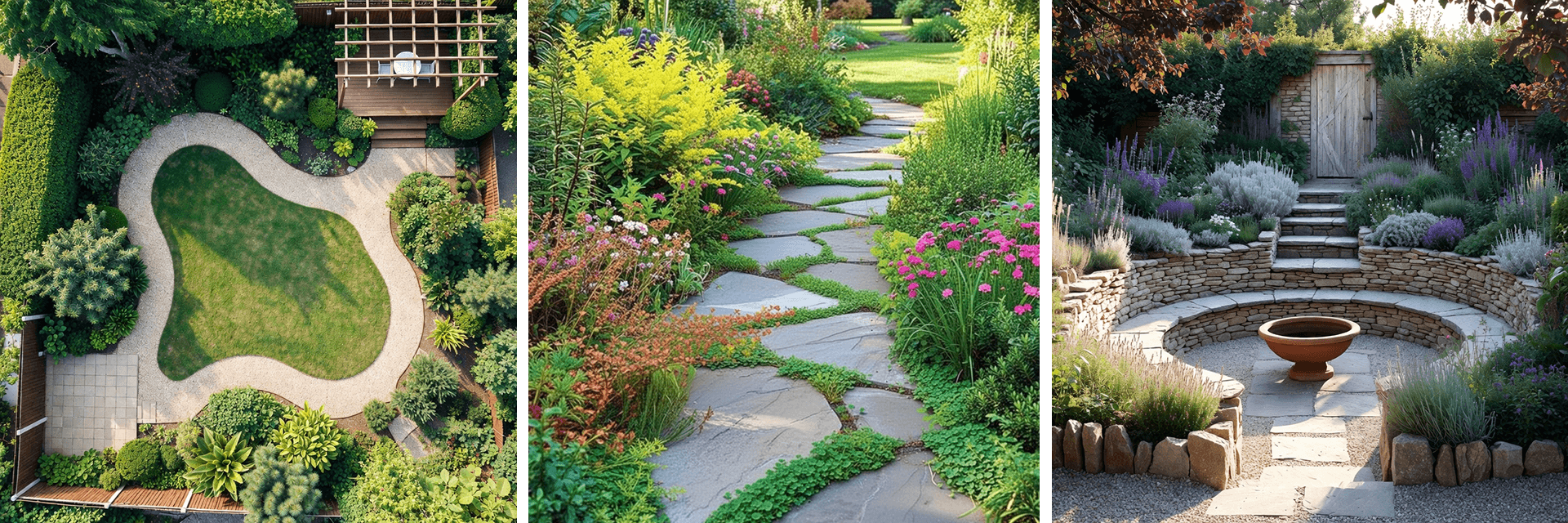
Thoughtful layout, from gentle curves to clear focal points, can help narrow gardens feel calmer and more spacious.
In compact townhouse and terrace gardens, layout matters more than decoration. A well-considered structure can make a narrow space feel longer, calmer, and more inviting, without adding clutter. The most successful small gardens tend to guide movement gently and create a sense of progression, even if the distance is short.
A common pattern that works well locally is to treat the garden as two connected areas rather than one open rectangle. Near the house, the space feels practical and open. Further away, it becomes softer and more sheltered.
A simple and effective layout approach
Keep the area nearest the house relatively open for seating or dining
Create a second, slightly more enclosed area towards the back using planting or a light structure
Link the two areas with a narrow path or change in surface
Place one clear focal point at the far end to draw the eye through the space
Avoid breaking up the centre of the garden with obstacles
Using fewer materials, repeated shapes, and restrained planting helps the garden feel intentional rather than busy. In small plots, simplicity often reads as confidence.
Planting for privacy without blocking light
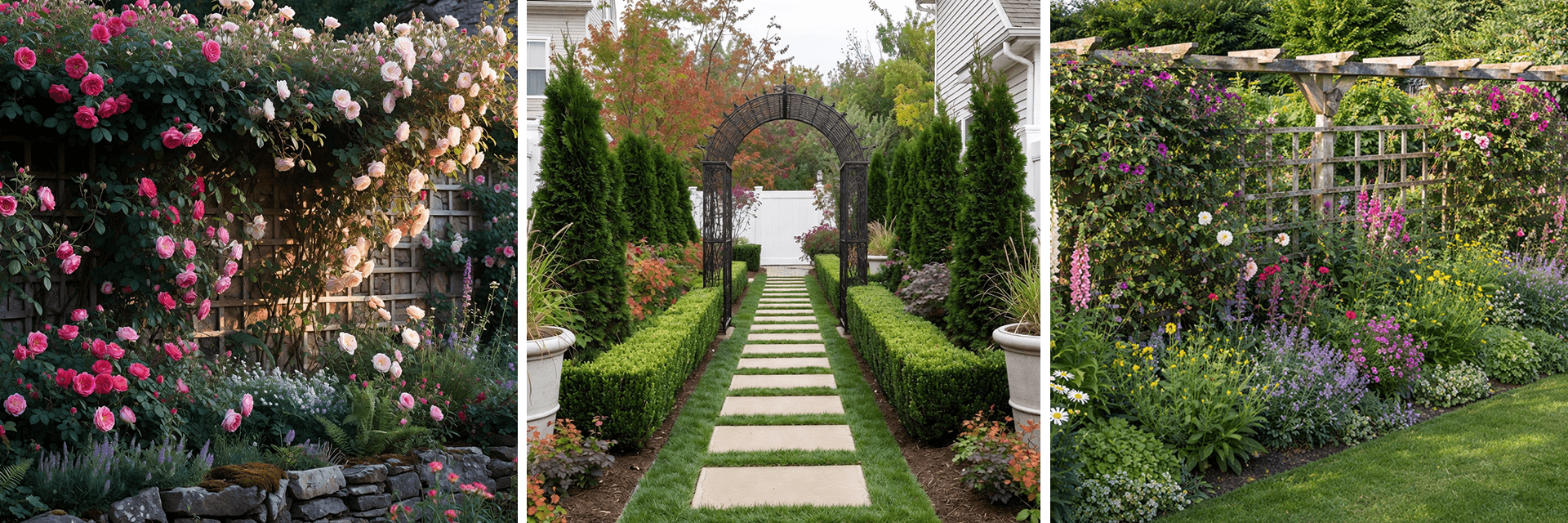
Climbers, trellis, and layered planting can provide effective privacy while keeping gardens light, open, and connected to their surroundings.
Privacy is often the biggest concern in townhouse and terrace gardens, particularly in town-centre locations. The temptation is to install tall fencing or dense hedging, but this can make a small garden feel darker and more enclosed than necessary.
A more effective approach is to layer planting so that privacy is created where it is actually needed, usually at sitting height, while keeping light moving through the space. Vertical planting plays a major role here, offering height without taking up ground area.
Climbers are especially useful in narrow gardens because they soften boundaries and provide screening without adding bulk. They can be trained on trellis panels, wires, or freestanding supports, allowing privacy to be positioned precisely.
Reliable climbers for compact gardens
Evergreen climbers for year-round screening work best on sheltered walls
Flowering climbers add seasonal interest without overwhelming the space
Shade-tolerant climbers are invaluable where light is limited
Supporting climbers properly with spacers and airflow helps prevent damp-related problems and keeps walls healthy. In small gardens, these details matter more than they might elsewhere.
Making containers and vertical planting work long term
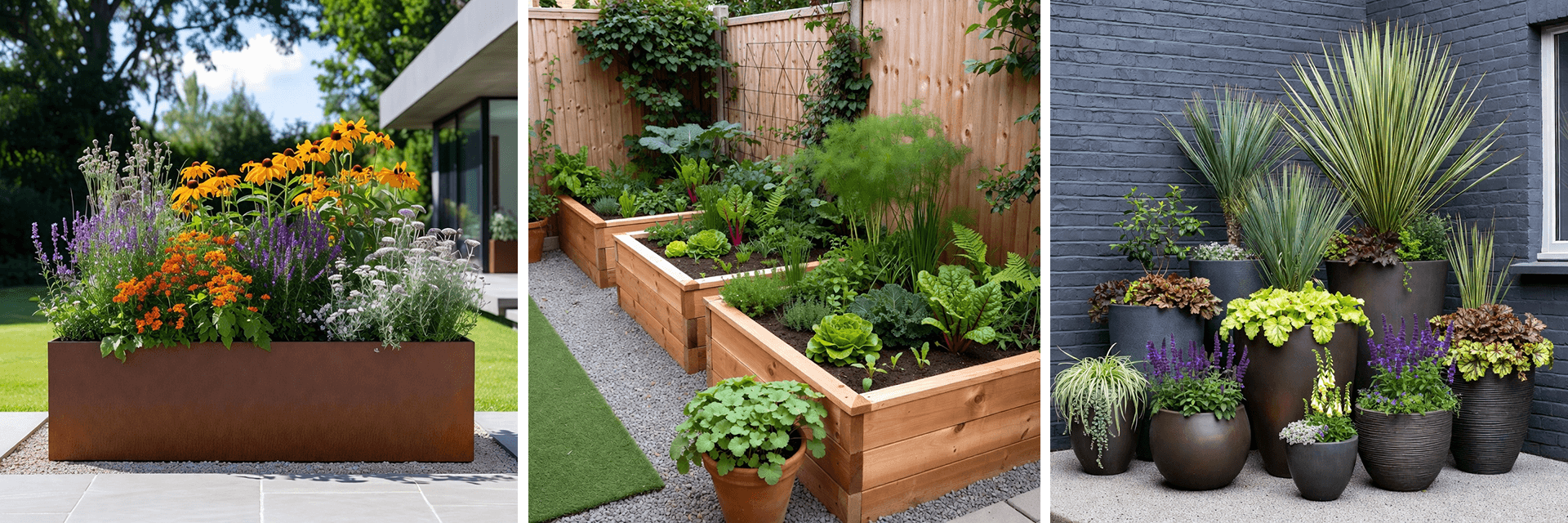
Larger containers and thoughtful grouping help planting stay healthy and manageable over time, particularly in smaller gardens.
Containers are often essential in townhouse and terrace gardens, not just for flexibility but for control. They allow plants to sit in better light, avoid poor ground conditions, and provide height where borders are narrow or absent. The challenge is keeping them healthy through wet winters and dry spells.
In Buckinghamshire conditions, larger containers are generally easier to manage. They dry out more slowly, buffer temperature changes, and support stronger root systems. Choosing the right compost mix is just as important as plant choice, particularly where winter waterlogging is a risk.
A practical container setup
Use large pots with clear drainage holes
Raise containers slightly so excess water can escape
Choose free-draining compost mixes suited to the plants being grown
Mulch the surface to reduce moisture swings and weed growth
Group pots together where possible to reduce exposure
Vertical planting extends this idea further. Walls, fences, and freestanding frames can support climbers, trained shrubs, or even compact edibles, turning unused vertical space into something productive and attractive.
Key Takeaways: Designing a Small Townhouse or Terrace Garden That Actually Works
Observe first, design second Spend time tracking real sunlight patterns, winter drainage, and overlooking windows over a few typical days. Understanding your garden’s actual behaviour prevents the most common and expensive mistakes.
Create calm with clear zones, not clutter Use gentle curves, stepping stones, or subtle level changes to make narrow spaces feel longer and more inviting. Define 2-3 purposeful areas (for example seating, planting, and path) rather than trying to squeeze everything in.
Build privacy selectively and vertically Full fences often block light. Instead, use climbers on trellis, tall container plants, or strategic evergreen screens around the main sitting area. Light and privacy can coexist beautifully.
Choose larger pots and smart soil Bigger containers with free-draining, high-quality compost stay healthier longer, dry out less in summer, and freeze less severely in winter. Group pots together to create microclimates and make watering easier.
Turn boundaries into opportunities Treat walls, fences, and railings as extra planting space. Vertical climbers, wall-mounted planters, or slim living wall systems add lushness and interest without stealing valuable floor area.
These principles turn even the trickiest High Wycombe townhouse plot into a calm, usable, year-round retreat without fighting the space you actually have.
FAQ
What grows well in a shaded terrace garden
Foliage plants, shade-tolerant climbers, and shrubs with good structure tend to perform best. Containers can also help lift plants into brighter conditions where ground-level light is limited.
How can privacy be improved quickly
Targeted screening around seating areas, combined with climbers or tall planting in containers, often works faster and feels lighter than permanent barriers.
Are vertical planting systems hard to maintain
Simple trellis-based planting is usually low effort. More complex systems need regular care, so it is worth matching the approach to the time available.
How can pots be kept healthy through summer
Larger containers, surface mulching, and grouping pots together all help reduce drying out and make watering more manageable.
Real Transformations We've Created for Homeowners Just Like You
We’ve helped homeowners across Buckinghamshire and Hertfordshire transform compact, overlooked townhouse and terrace gardens into calm, private spaces that work year round.
You can explore a selection of our Residential Garden Transformations to see how thoughtful layout, planting, and vertical solutions have shaped a wide range of gardens, from town-centre courtyards to larger family plots in areas such as Amersham and Tring.
Every project begins with the same careful observation of light, drainage, and privacy needs outlined in this guide.
If you’d like help creating a townhouse or terrace garden that feels balanced, private, and easy to live with, Vivid Gardens offers bespoke design support across High Wycombe and the wider Buckinghamshire area.
In particularly tight spaces, we also specialise in vertical solutions such as living walls, designed for outdoor use to introduce planting and seasonal interest without sacrificing light or floor space.
An initial conversation is always free, and we’re happy to explore ideas before any decisions are made.
Where to go next
The articles below go deeper into resilient planting, pollinator-friendly choices, and practical design ideas for real gardens.
| Article | Best for | Who it suits |
|---|---|---|
|
|
Finding practical screening ideas that reduce overlooking, soften traffic corridors, and create a greater sense of enclosure without overwhelming a smaller garden. | Homeowners whose gardens back onto roads, footpaths, or neighbouring properties and who want privacy solutions that balance planting, structure, and year-round effectiveness. |
| Choosing plants that can cope better with changing seasonal conditions where small spaces swing quickly between wet and dry. | Gardeners who want a townhouse garden to stay more reliable and lower-maintenance despite drainage issues or more exposed positions. | |
| Adding planting that keeps a compact garden visually interesting when space is limited and every border needs to work harder. | Readers who want a small garden to feel more considered through autumn and winter rather than fading once summer colour drops away. | |
| Understanding how compacted or disturbed ground can affect drainage, planting performance, and long-term garden success on newer plots. | Anyone planning a townhouse garden where building work may have left poor soil conditions that need addressing before planting. |