
How to Improve Poor Soil in High Wycombe New-Build Gardens
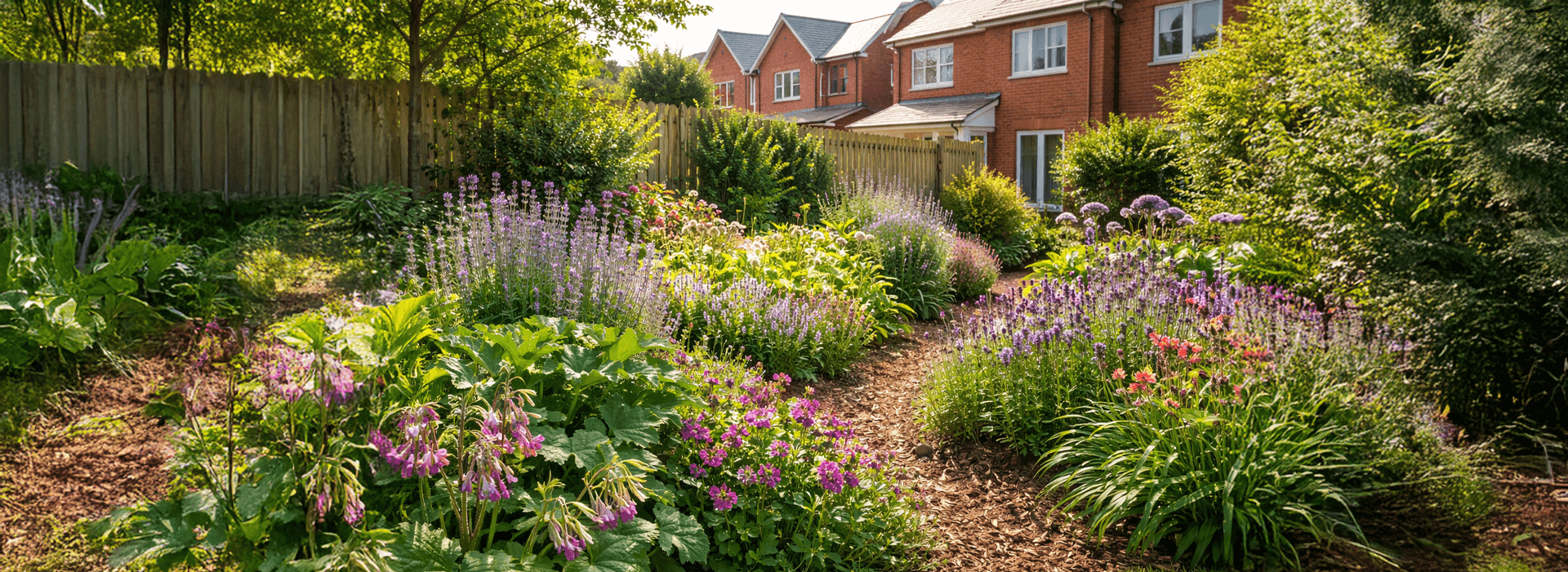
New-build gardens in High Wycombe often disappoint for the same reason. What looks like a planting problem is usually a soil problem first.
In developments around Booker, Cressex, Sands and Handy Cross, it is common to inherit compacted clay, thin topsoil, and ground that has taken heavy traffic during construction. The result is familiar. Lawns struggle to establish, puddles sit after rain, and new planting never seems to settle properly.
The good news is that this is usually fixable. In most cases, the real issue is not dramatic hidden rubble. It is damaged soil structure. Topsoil has often lost much of its life and texture through handling and storage, while the clay below has become so compacted that roots and water can barely move through it.
That combination can make a new-build garden feel harder work than it should. Wet winters leave the ground waterlogged, and dry spells can turn the surface hard and cracked. Many of the same issues show up elsewhere in Buckinghamshire, but High Wycombe plots often combine heavy clay with exposed, hard-finished layouts that make the problem feel worse.
With a phased approach, most gardens improve steadily. The aim is not to force instant results. It is to rebuild structure, improve drainage where needed, and create conditions in which planting can actually succeed.
Why new-build soil in High Wycombe can be difficult
New-build gardens tend to share a few recurring problems:
compaction from construction traffic
shallow or poor-quality topsoil
heavy clay beneath that drains slowly
variable fill material across the plot
exposed layouts that dry quickly in summer and feel harsher in winter
These issues often work together. If the soil is compacted and biologically weak, plants struggle long before variety choice becomes the real issue. That is why soil improvement usually needs to come before any serious planting plans.
Assess your soil before doing anything major
Start with a few simple checks before reaching for machinery or ordering large quantities of topsoil.
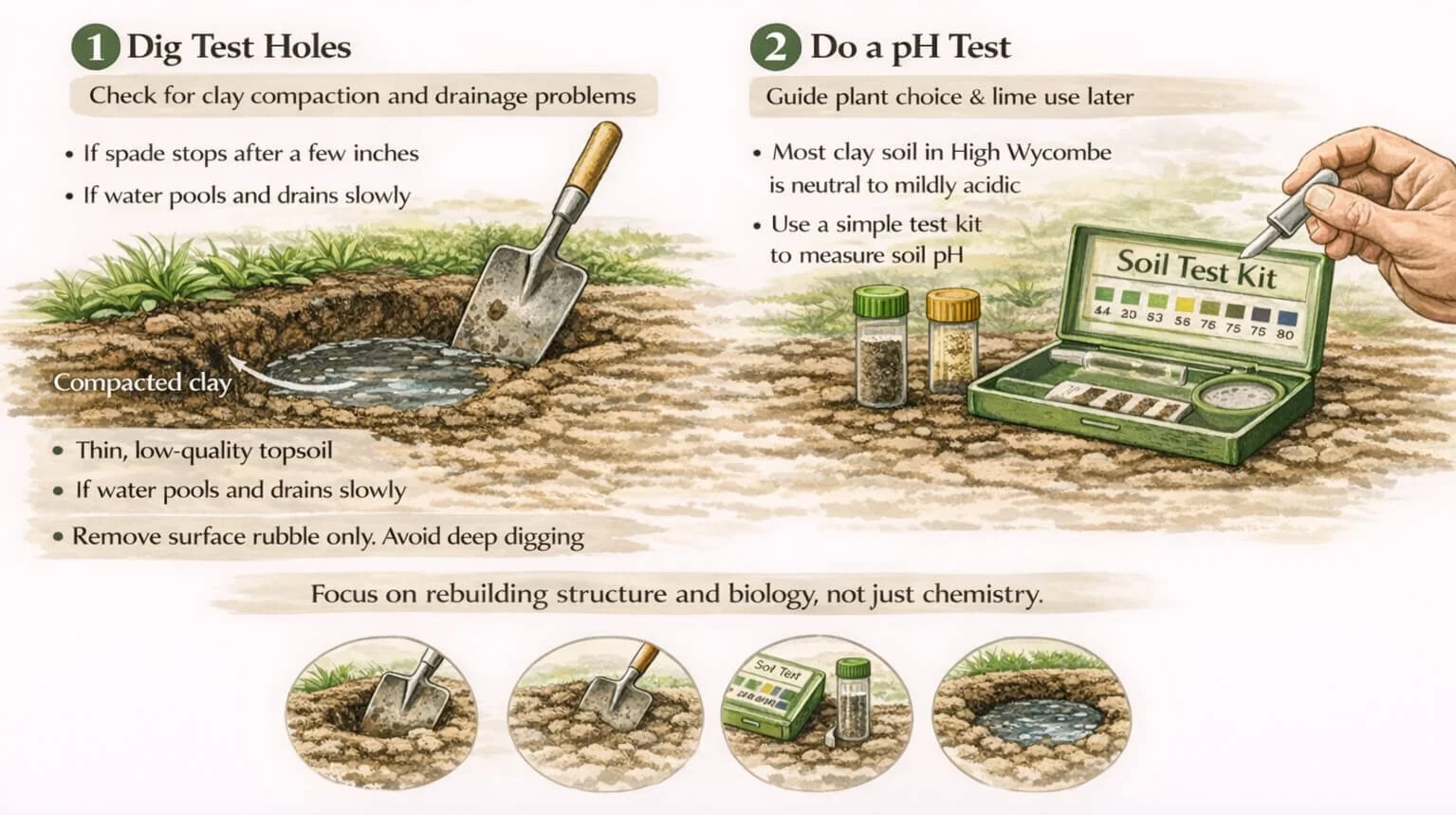
Dig several small test holes across the garden. If the spade stops abruptly after a short depth, or the soil feels dense and sticky beneath a thin surface layer, compaction is likely to be part of the problem. If water sits in the holes after rain, drainage is too slow.
Remove obvious surface rubble by hand, but avoid deep excavation unless there is a clear reason for it. On heavy clay, overworking the ground can make structure worse rather than better.
A basic soil pH test can be useful, but it is usually secondary. Around High Wycombe, the more important question is often structural rather than chemical. Can roots move? Can water move? Is there enough organic matter near the surface to support recovery?
What actually helps poor new-build soil
On heavy clay, the best improvements are usually gradual and low-disturbance.
1. Build structure from the surface down
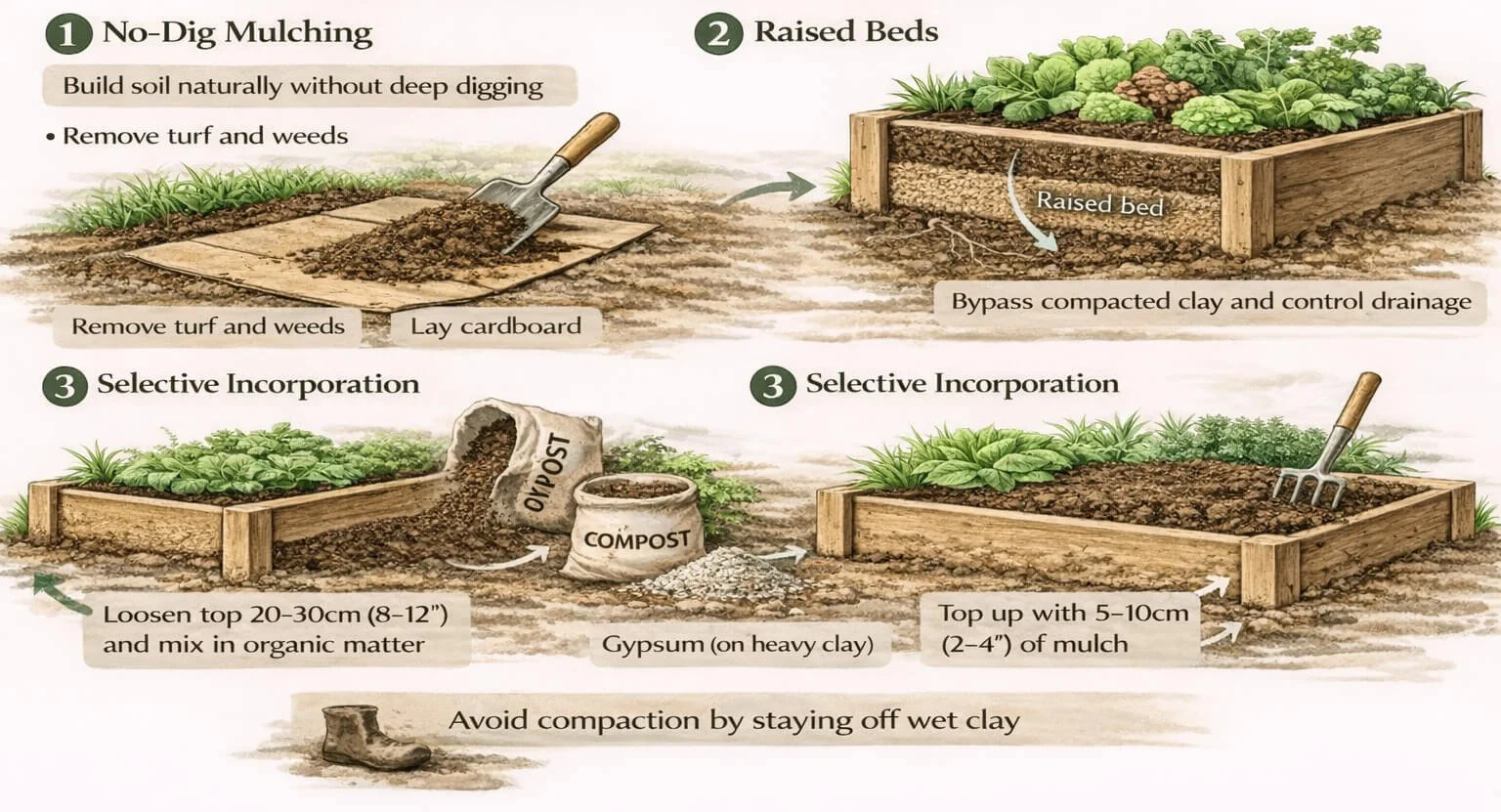
For many borders and lawn areas, no-dig mulching is the best starting point. Apply a generous layer of organic matter such as well-rotted manure, garden compost, or mushroom compost over the surface. Where weeds are heavy, cardboard underneath can help suppress them during establishment.
This approach does not deliver instant transformation, but it helps rebuild structure and biological activity without churning compacted clay into a heavier mess. In most gardens, visible improvement starts to show over the first one to two growing seasons.
2. Improve only where you plan to plant
If you are creating new borders, improve the top layer where planting will actually happen rather than trying to remake the whole garden in one go.
Loosen the upper 20 to 30 cm where practical, then work in organic matter. On very heavy clay, agricultural gypsum can sometimes help with aggregation, but it works best as part of a broader improvement programme rather than as a stand-alone fix.
One thing to avoid is blanket mixing of sand through clay borders. Done badly, that can make the structure denser rather than lighter.
3. Use raised beds where they are genuinely justified
Raised beds can be useful where compaction is severe, drainage is consistently poor, or you need a reliable root zone above difficult subsoil. They are often a sensible option, but they are not the answer to every soil problem.
If water stands across the whole garden for days, a raised bed may help the planting area while leaving the wider site issue unchanged. That is worth keeping in mind before treating raised beds as a complete solution.
4. Protect the progress you make
Once clay begins to improve, it is easy to undo that work. Avoid walking on wet soil. Avoid digging when the ground is sticky. Keep adding organic matter each year. Steady, repeated improvement usually works better than a single dramatic intervention.
What to plant while the soil is still recovering
While the ground improves, keep planting choices practical. Look for plants that can tolerate heavier soil, variable moisture, and a less-than-perfect start rather than demanding ideal conditions straight away.
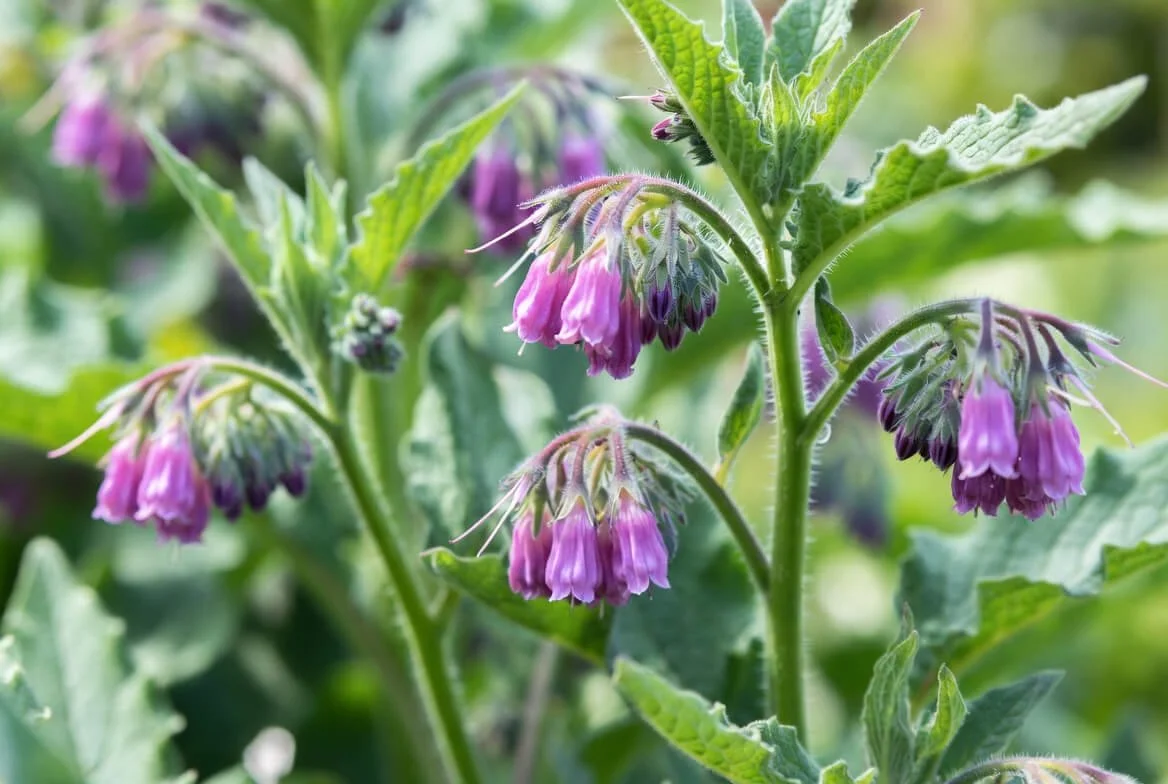
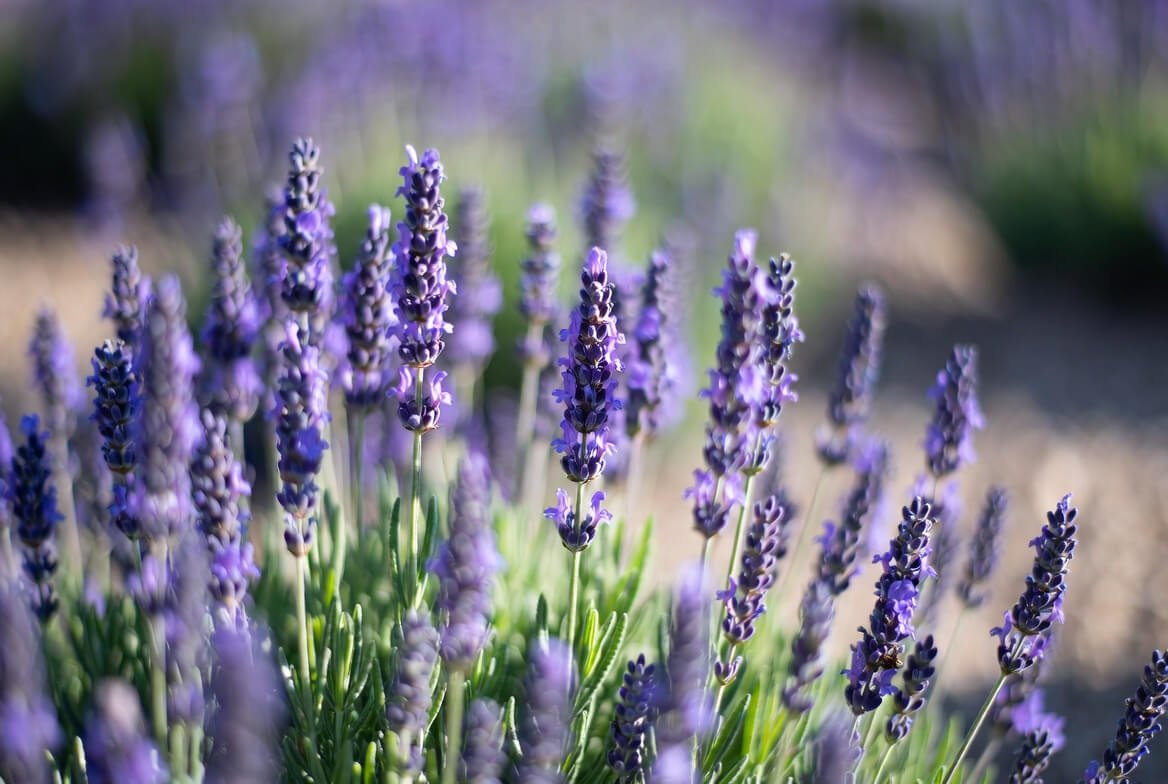
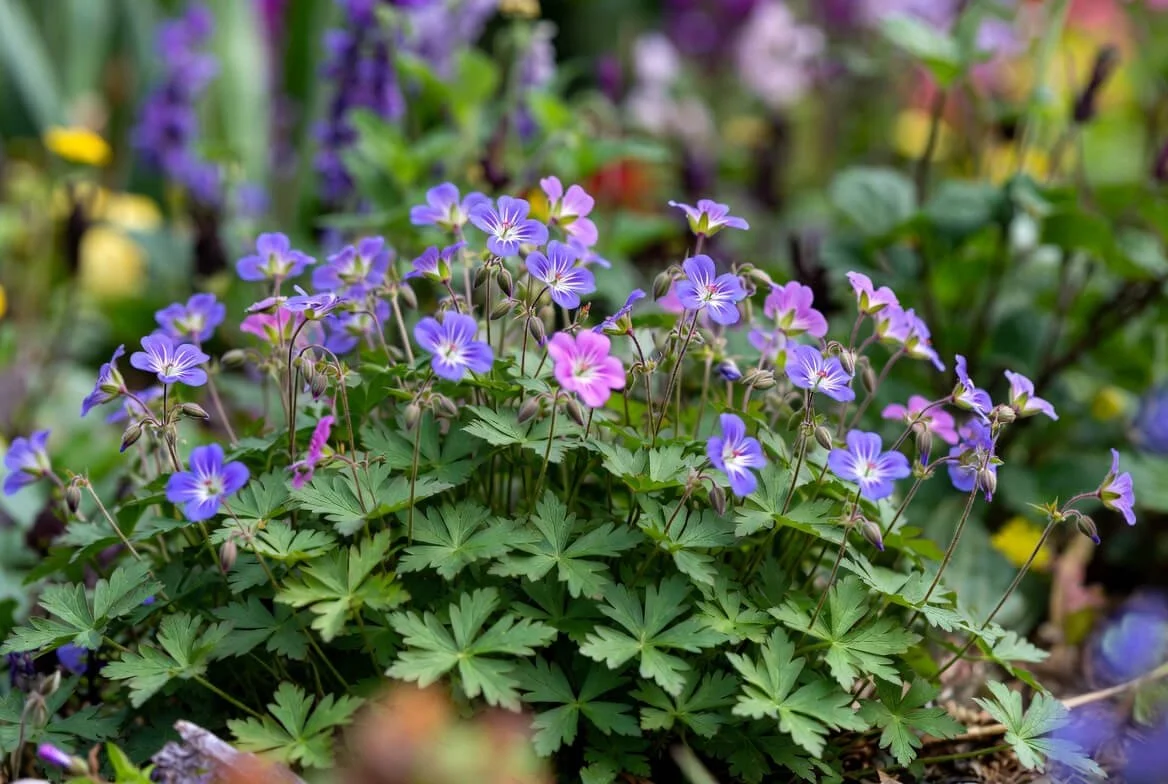
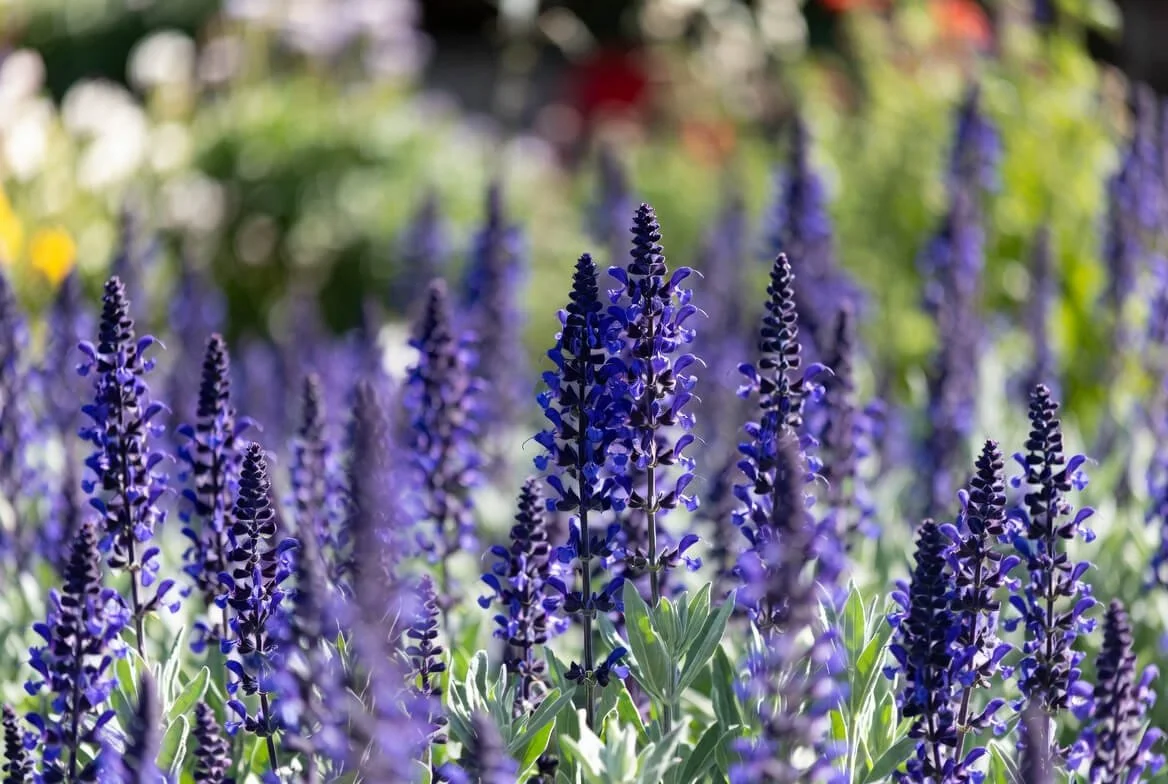
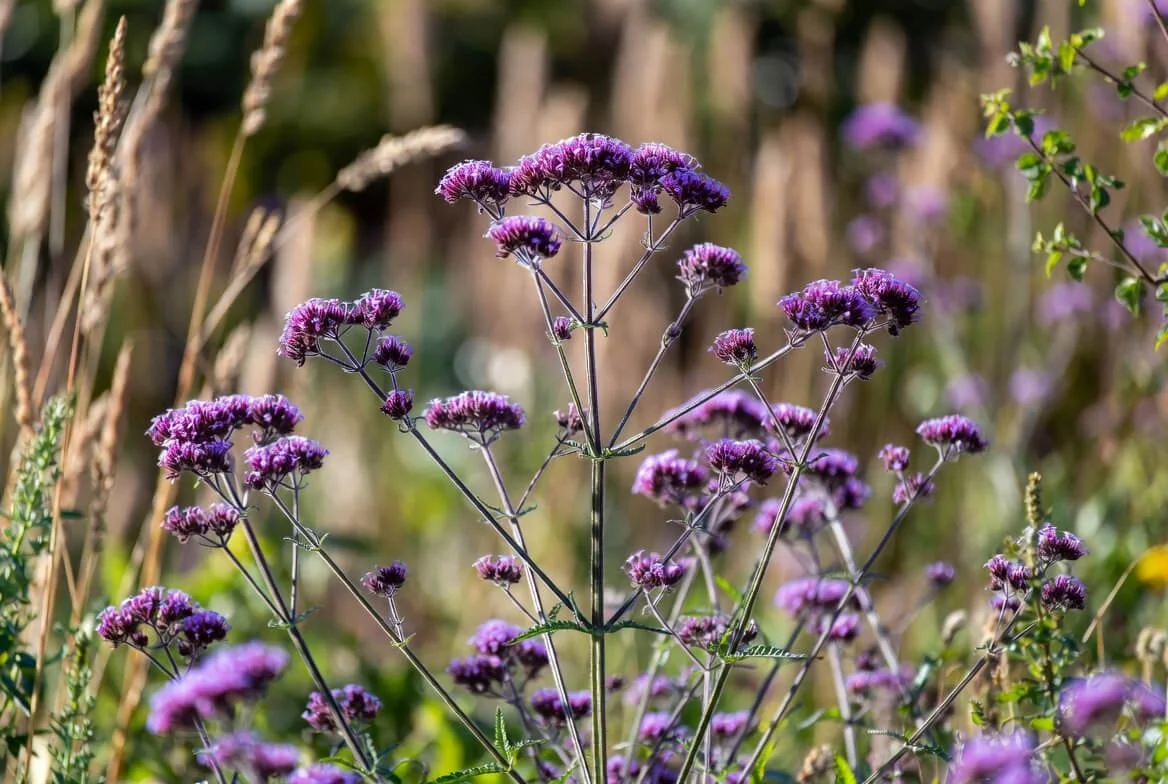
The aim at this stage is not to build a perfect planting scheme. It is to stabilise the garden, cover bare ground, and help the soil recover while conditions improve year by year.
| Plant | Why It Helps Poor Soil | Best Conditions | Management Notes |
|---|---|---|---|
| Comfrey (Symphytum varieties) | Deep roots penetrate compacted layers and recycle nutrients into surface growth over time. | Sunny or lightly shaded areas with sufficient space for mature plants. | Use deliberately. Cut foliage regularly for mulch. Avoid planting in small or highly managed beds. |
| English lavender (Lavandula angustifolia) | Thrives once drainage improves, acting as a useful indicator that soil structure has stabilised. | Sunny, open positions with grit added to planting pockets. | Avoid winter wet. Do not overwater young plants on heavy clay. |
| Hardy geraniums | Dense groundcover suppresses weeds and protects the soil surface as structure gradually improves. | Borders with partial soil improvement; sun or light shade. | Mulch well in the first year. Divide clumps if vigour declines after several seasons. |
| Perennial salvias | Adaptable root systems cope well with fluctuating moisture during soil recovery. | Free-draining positions in full sun once clay has been locally improved. | Cut back in spring only. Avoid planting into heavy clay without prior drainage improvement. |
| Verbena bonariensis | Light, open growth tolerates variable moisture while allowing soil life to develop beneath. | Sunny, sheltered gardens; performs well in urban heat pockets. | Self-seeds lightly. Thin seedlings in spring to maintain balance. |
If you want to keep this page tightly in its own lane, do not expand this section much further than this. Let it acknowledge suitable plants without turning into a full planting guide.
Soil amendments that are worth considering
A few amendments can help, provided they are used in the right way. The principle is simple: use materials that improve structure and biology over time, and be cautious of anything sold as a quick fix.
| Soil Amendment | Why It Helps Clay Soil | When to Use & Key Considerations |
|---|---|---|
| Agricultural gypsum | Encourages clay particles to bind into larger aggregates, improving drainage and aeration without altering soil pH. | Most useful on very heavy or compacted clay. Apply to the surface and allow rainfall or irrigation to carry it down. Always combine with organic matter for lasting improvement. |
| Grit or horticultural sand | Improves local drainage and root aeration when used in a targeted way. | Use selectively in planting holes or raised beds only. Avoid mixing through whole borders, as excessive sand can increase compaction in clay soils. |
| Mushroom compost | Adds organic matter and helps open clay structure; can be mildly alkaline. | Best applied as a surface mulch rather than dug in. Avoid around acid-loving plants such as rhododendrons, camellias, and blueberries. |
| Well-rotted manure or garden compost | Builds soil biology, improves structure, and balances moisture retention with drainage. | Apply annually as a mulch in autumn or spring. Use only well-rotted material; fresh manure can damage roots and disrupt soil life. |
Soil amendments that are worth considering
When improving heavy clay soil in a new-build garden, it helps to be selective. Many commonly suggested fixes offer only short-term benefit, and some can make structure worse if they are used badly. The most useful amendments are the ones that support soil structure, biological activity, and gradual recovery over time.
In High Wycombe gardens, the issue is often less about changing soil chemistry and more about improving structure, drainage, and resilience. The materials below can all help when they are used in the right context and combined with low-disturbance methods such as mulching, localised soil improvement, and careful timing.
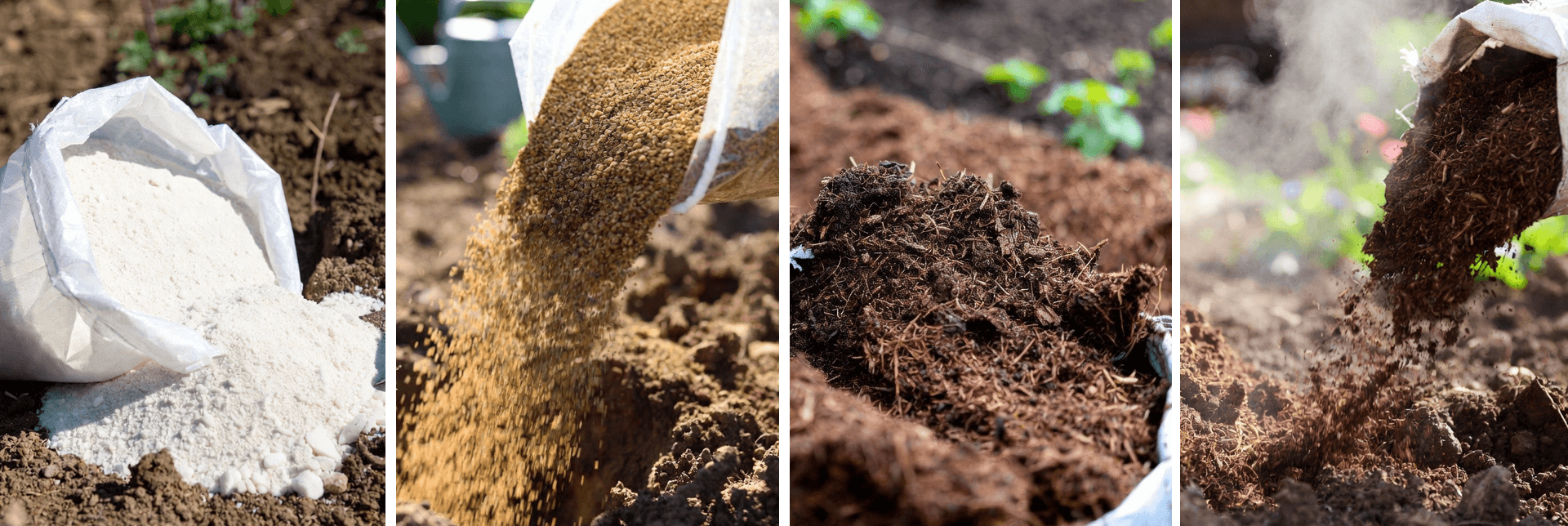
The table below shows which amendments are most useful, where they tend to help, and what to watch for.
| Soil Amendment | Why It Helps Clay Soil | When to Use & Key Considerations |
|---|---|---|
| Agricultural gypsum | Encourages clay particles to bind into larger aggregates, improving drainage and aeration without altering soil pH. | Most useful on very heavy or compacted clay. Apply to the surface and allow rainfall or irrigation to carry it down. Always combine with organic matter for lasting improvement. |
| Grit or horticultural sand | Improves local drainage and root aeration when used in a targeted way. | Use selectively in planting holes or raised beds only. Avoid mixing through whole borders, as excessive sand can increase compaction in clay soils. |
| Mushroom compost | Adds organic matter and helps open clay structure; can be mildly alkaline. | Best applied as a surface mulch rather than dug in. Avoid around acid-loving plants such as rhododendrons, camellias, and blueberries. |
| Well-rotted manure or garden compost | Builds soil biology, improves structure, and balances moisture retention with drainage. | Apply annually as a mulch in autumn or spring. Use only well-rotted material; fresh manure can damage roots and disrupt soil life. |
Key takeaways for new-build gardens
focus on soil structure before ambitious planting
use organic matter consistently rather than digging aggressively
assess the garden in several places before deciding on a solution
use raised beds where they are justified, not by default
avoid working clay when wet
expect steady improvement over time rather than instant perfection
Frequently asked questions
How long does it take to improve a new-build garden?
Most gardens show useful progress within one to two years if mulching and careful soil management are consistent. More resilient soil structure usually takes longer.
Is buried rubble always the main problem?
No. It can be part of the problem, but compaction and lack of organic matter are often more important.
Can I fix this by adding a thick layer of topsoil?
Sometimes, but not always. In many gardens it is better to improve the existing soil gradually so you do not create an awkward boundary between layers.
What if the soil is very acidic?
Test first. There is no benefit in guessing. In many High Wycombe gardens, structure is the more urgent issue.
Are shop-bought composts worth using?
Yes, especially when starting out. Good-quality peat-free composts can be useful as part of a broader improvement plan.
A more workable garden starts with the soil
Poor soil in a new-build garden can feel frustrating, especially when the space is new and expectations are high. But these conditions are common, and they're usually workable.
The most effective approach is rarely the most dramatic one. Careful assessment, steady addition of organic matter, and realistic expectations tend to deliver better long-term results than quick fixes.
Improve the soil first and everything else becomes easier, from planting to lawn establishment to everyday use of the garden. If your new-build garden is in or around High Wycombe, you can see how we approach garden design in High Wycombe, or book a free call for advice tailored to your site, layout and priorities.