
Garden Design and Landscaping in High Wycombe
Gardens designed for the Wye valley, from the chalk slopes to the clay-with-flints tops
Vivid Gardens designs, builds and plants residential gardens in High Wycombe and the surrounding villages, working from nearby Beaconsfield across Buckinghamshire and the Home Counties.
High Wycombe sits in a long, narrow valley where the River Wye cuts through the Chiltern Hills, with beech woods rising on both sides. That setting shapes local gardens far more than most people expect. The town runs for several miles along the valley, so two gardens barely a mile apart can sit on completely different ground, catch frost at different times of year and need genuinely different planting.
We think that's the single most useful thing to understand before designing a garden here, and it's why we start with the site rather than a style.
The ground under High Wycombe gardens
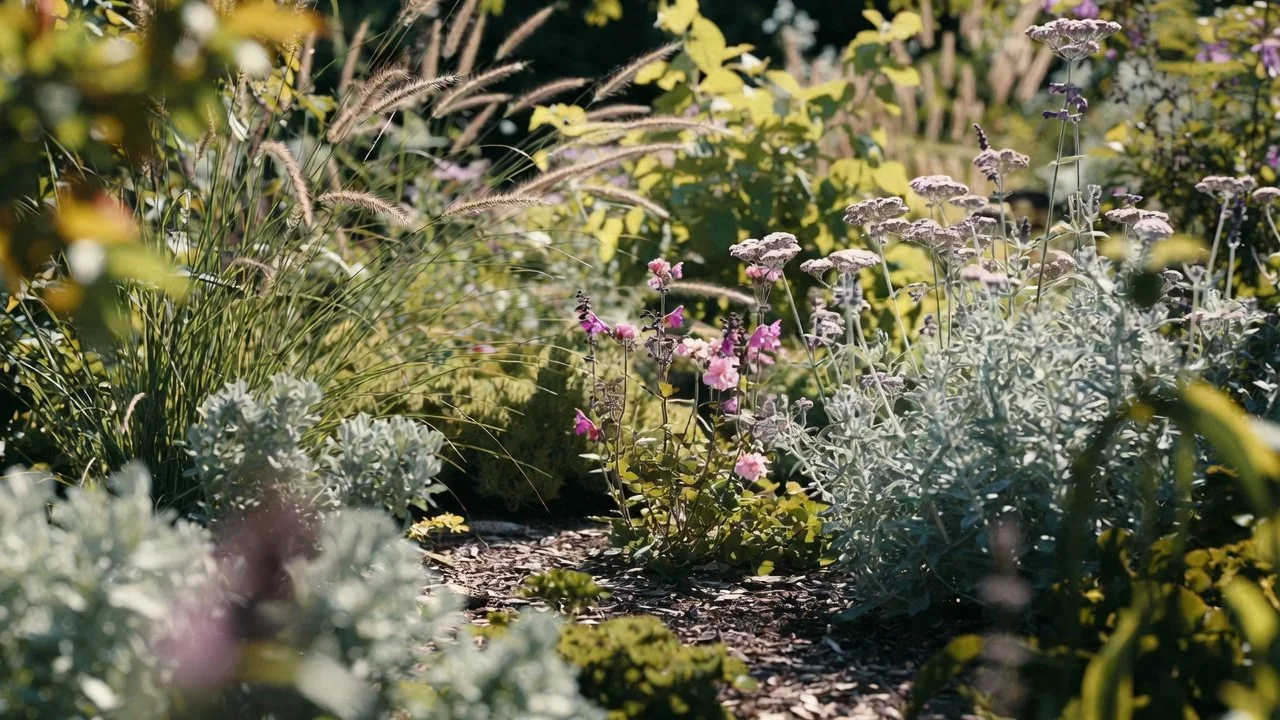
Most of the town sits on chalk, capped on the higher ground by clay-with-flints. In practice that gives us three quite different starting points.
On the valley sides, soil over chalk tends to be thin, free-draining and alkaline. It warms early and rarely waterlogs, but it's low in nutrients and can dry out hard by mid-July. It suits chalk-tolerant and Mediterranean planting very well, and it punishes anything that wants steady moisture.
On the higher ground, towards Hazlemere, Tylers Green and Downley, you're more likely to find heavier flinty clay. It holds water through winter, bakes and cracks in a dry August, and runs slightly acidic. It rewards planting that can cope with both extremes, and it needs its drainage thought through before anything goes in.
Newer estates add a third layer on top of either. Construction traffic compacts the ground, and the topsoil laid at handover is often a thin skim over subsoil. That ground needs decompaction and organic matter before a planting scheme is worth putting in at all. Our own new-build garden project in High Wycombe started on exactly that kind of poor ground, and it shows how layout, levels and planting come together once the groundwork is done properly. If that's the position you're starting from, we've also written about improving poor soil in new-build gardens.
Getting this wrong is the most common reason a new planting scheme around here looks tired by its second summer. It's rarely the plant choice on its own. It's the plant choice against the wrong ground.
Frost pockets on the valley floor
Because the valley is narrow and steep-sided, cold air drains downhill on still, clear nights and settles at the bottom. Gardens low in the valley can run several degrees colder than gardens on the slopes above them, with later frosts in spring and earlier ones in autumn.
It's worth knowing before committing to tender or early-flowering planting, and it's a real reason why a plant that thrives for a neighbour up the hill can struggle lower down. Our guide on protecting a garden from frost covers the practical side.
Compact plots, terraces and overlooked gardens
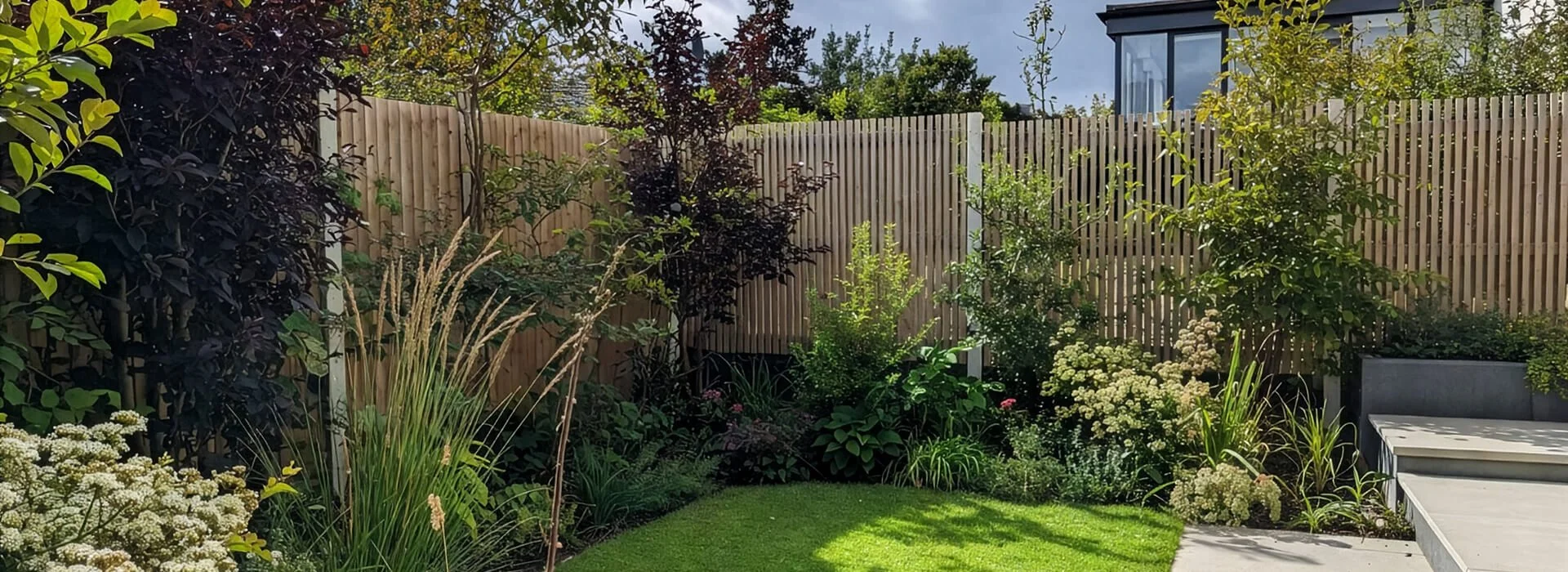
High Wycombe has a lot of tightly packed housing, from Victorian and interwar terraces near the centre to newer estate plots on the slopes. In a garden that size, weak decisions show up fast. A terrace that's slightly too big, a path that cuts straight through the middle, or borders too shallow to hold a decent plant will affect how the whole space feels.
Overlooking is usually part of the same conversation, and on sloping plots it cuts both ways, since a garden can be overlooked from above as well as from either side. Planting generally solves this better than raising fences, because it screens, softens and gives the space some rhythm through the year rather than just walling it in. For smaller plots specifically, we've put together small garden ideas for townhouses and terraces.
Who designs your garden
Vivid Gardens is led by Erika Meh, who holds a Master's degree in Ornamental Horticulture from Corvinus University of Budapest and has more than 20 years of hands-on horticultural experience. Our team brings over 30 years in planting and landscaping between them.
That background matters most in the planting. Reading ground conditions properly, and choosing plants that will still be thriving in five years rather than just looking good on handover day, is the part that's hardest to get right and easiest to get wrong. You can read more about Erika and how we work, or see our design and build process.
Frequently asked questions
What kind of soil will I have in High Wycombe?
It depends where in the town you are. Gardens on the valley sides usually sit on thin, free-draining, alkaline soil over chalk. Higher ground towards Hazlemere, Tylers Green and Downley is more likely to be heavier flinty clay. Newer estates can have compacted ground with a thin layer of topsoil over subsoil. We check this on site rather than assuming, because it changes the planting plan significantly.
Why does my garden get frost when others nearby don't?
You're probably low in the valley. Cold air drains downhill on still, clear nights and pools on the valley floor, so gardens at the bottom can be several degrees colder than gardens on the slopes above, with later spring frosts and earlier autumn ones. It's a real effect and it's worth designing around rather than fighting.
How much does garden design cost in High Wycombe?
It depends on the size of the plot, the state of the ground and how much of the work is design versus build. A planting-led refresh of an existing layout costs a fraction of a full redesign with new hard landscaping, and ground problems like compaction or drainage add to the build rather than the design. We're straight about costs at the free consultation, once we've actually seen the garden, because a number quoted before that is a guess.
Do you work on small town gardens as well as larger plots?
Yes, and smaller gardens often benefit most from proper design, because every decision carries more weight. In a compact plot the difference between a layout that works and one that doesn't is usually a matter of a foot or two in the right places.
Can you improve privacy in an overlooked garden?
Yes. Layout, planting and screening together usually work better than simply raising boundaries, which can make a small garden feel closed in. On sloping plots we also look at overlooking from above, not just from the sides.
Do you work with new-build gardens?
Yes. New-build plots usually need groundwork before design work is worth doing, since compaction and shallow topsoil limit what any planting scheme can achieve. We'd rather deal with that properly at the start than watch a scheme struggle in its second year.
Do you handle the build as well as the design?
Yes. We design and build, so the planting plan and the hard landscaping are considered together rather than handed between separate teams.
Areas we cover
We work throughout High Wycombe and the surrounding villages, including Loudwater, Hazlemere, Downley, Penn, Tylers Green, Hughenden Valley, Flackwell Heath, Wycombe Marsh and Holmer Green.
If you're planning a project, you can see more of our garden design in Buckinghamshire or browse our residential garden transformations before booking a free consultation.
You can also see recent work on Instagram. Undecided? See what local clients say in our Google reviews for Vivid Gardens.