
How to Protect Your Garden From Frost | UK Guide

There's a particular sinking feeling that comes with walking out on a bright winter morning and finding the plants you'd been nursing along gone limp and black overnight. Frost tends to do its worst quietly, on clear and still evenings when the day's warmth escapes straight up into a cloudless sky, and a mild afternoon is no guarantee you're in the clear. The reassuring part is that you don't need to wrap the whole garden, and you certainly don't need to panic. If you do just one thing tonight, look after your pots and any recently planted roots first, then cover soft top growth only on the nights that genuinely call for it.
Where you garden, and what you garden on, makes a real difference to how hard frost lands. We're based in Buckinghamshire and work across the Chilterns, and the contrast shows up every single winter. Down on the heavy clay of the Vale of Aylesbury, the soil holds water that freezes and expands, and in a bad cold snap it can lift young plants clean out of the ground, a problem known as frost heave. Up on the free-draining chalk of the Chiltern hills it's the opposite worry: that ground drains beautifully but cools fast, so the root zone chills sooner. There's a simple test that tells you which camp you're in. If water still sits on the surface a day or two after rain, your soil holds moisture, and those roots will feel the cold more keenly. It's one reason we'd always say that improving your soil structure matters just as much as anything you drape over the top.
Low-lying areas and dips in the landscape act as natural frost pockets, where denser cold air sinks and pools overnight, creating pockets that can be noticeably colder than surrounding higher ground. Even within a single garden, a sheltered corner against a south-facing wall might escape damage while an open lawn suffers. Look after sunrise and note where frost stays white longest. That is often where you should prioritise protection first.
Every garden has its own cold spots, and after enough winters looking after gardens around the county, you start to know them on sight. The dip at the bottom of a sloping lawn where cold air settles. The shaded strip that never quite catches the low winter sun. The open corner the wind funnels straight through. The trick is to walk your garden just after sunrise on a frosty morning and notice where the white lingers longest once the sun's up. That's your coldest ground, and that's where protection earns its keep first.
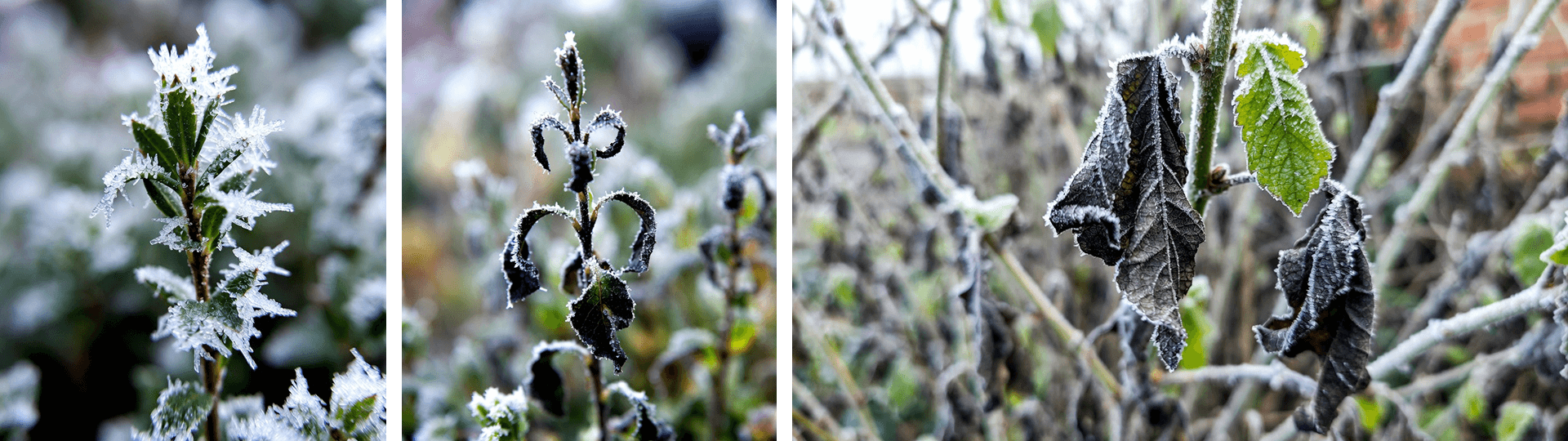
Examples of frost effects on garden plants: healthy leaves lightly iced (left) and severe blackened, wilted damage from hard frost (right).
Understanding Frost Risks in Local Gardens
Across the UK, ground frosts often appear from November through to April, with low-lying areas acting as frost pockets where cold air pools overnight. Free-draining soils cool quickly, putting roots at greater risk, while clay holds moisture that can freeze and heave plants upwards. Clear skies and light winds often increase frost risk, and how frost forms is closely linked to calm, cloudless nights.
Moist soil can hold onto warmth better than dry soil, so watering earlier in the day can help when the soil is genuinely dry. Avoid soaking already wet ground, and do not leave pots sitting in water, as cold and wet together can cause problems.
Effective Short-Term Protection Methods
When frost is forecast, a few reliable methods cover most gardens. The table below sets out how to use each one, what it suits best, and the mistake we see most often.
| Method | How to do it | Best for | Common mistake to avoid |
|---|---|---|---|
| Mulching | Spread 5 to 10 cm of bark chips, straw, or well-rotted compost over beds and around shrubs, kept a few centimetres clear of stems and crowns. | Insulating roots and soil in open ground through prolonged cold. | Piling mulch against stems, where it sits damp and invites rot. |
| Horticultural fleece | Drape over vulnerable plants before dusk. Use 17 to 23 gsm for ordinary frost, 30 gsm or a double layer for a hard freeze. Leave a small gap to the foliage and support with canes or hoops. | Tender top growth in beds and borders on the coldest nights. | Leaving it on through mild spells, which traps damp and cuts out light. |
| Insulating pots | Group pots against a house wall or under an overhang, wrap the sides with bubble wrap, hessian, or straw, and raise them on feet or bricks. | Container roots, which are exposed on all sides and freeze fastest. | Wrapping the plant instead of the pot, and leaving pots standing in icy water. |

Applying bark mulch around plants shown spreading by hand on the left and using a trowel on the right, helping insulate roots and steady soil temperature over winter.
A little more on the two that people ask about most. With containers, the roots are exposed on all sides, so they freeze faster than anything in open ground. Grouping pots together against a wall lets them share warmth and shelter each other from wind, and raising them on feet or bricks keeps the base out of the icy water that collects during a thaw. Always check the drainage holes are clear first, because a pot that can't drain is far more vulnerable than one that can.
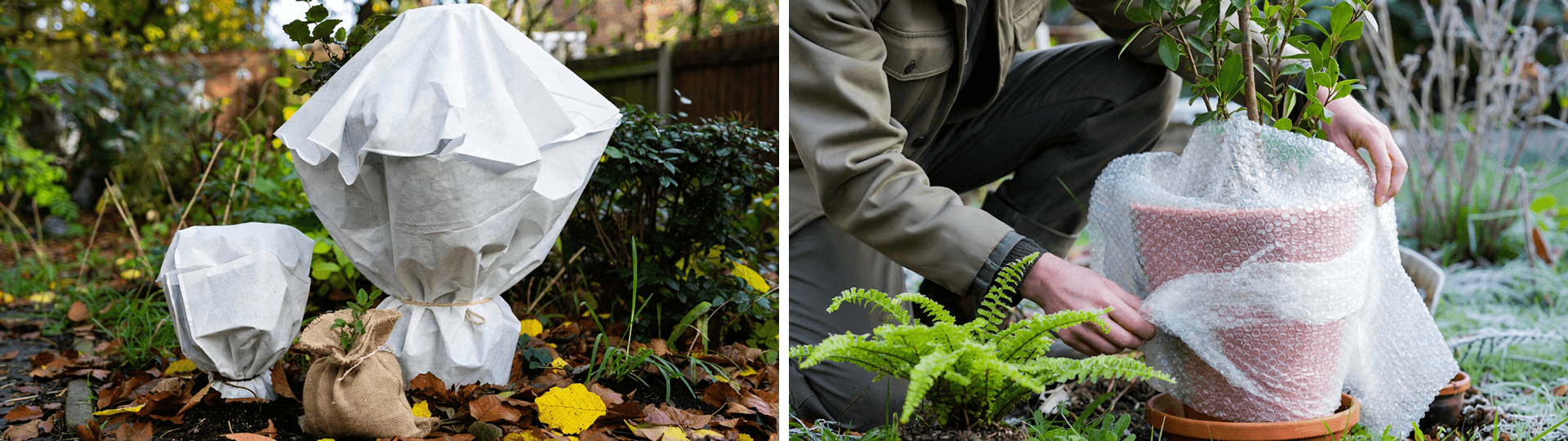
Common frost protection techniques shown using fleece or hessian for shrubs on the left and bubble wrap for insulating pots on the right.
With fleece, timing matters as much as the fabric. Put it on before dusk while there's still warmth in the ground to trap, and take it off again once the day climbs back above freezing. Secure the edges with stones, pegs, or clips so the wind can't lift it, and remember it's reusable for several seasons, so it's rarely a wasted buy.
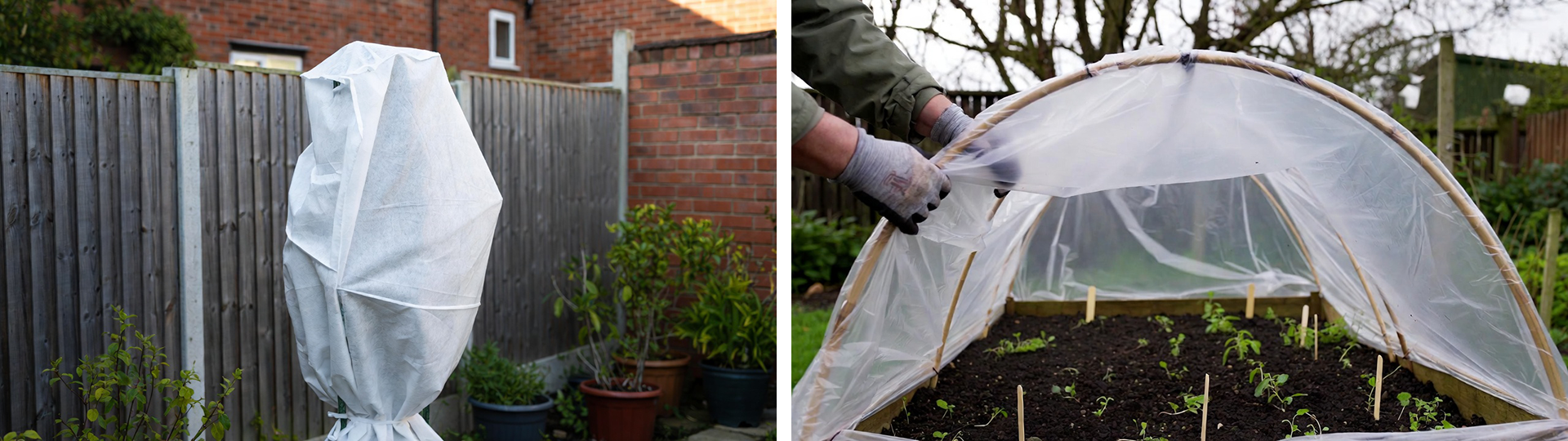
Effective frost protection methods shown wrapping a tall shrub in fleece on the left and covering a raised bed with a polythene cloche over hoops on the right.
Building Long-Term Resilience
Choosing genuinely hardy plants pays you back every winter, because the more of your garden that shrugs off frost on its own, the less you're out there with fleece and torch on the coldest nights. Viburnum earns its place with reliable evergreen foliage and often winter flowers or berries, and hellebores bring elegant blooms from late December in white, pink, and purple that hold up beautifully in the cold. If you're rethinking a border with resilience in mind, our guide to the best plants for winter interest goes deeper into structural, cold-tolerant choices that carry a garden through the bleak months.
Sarcococca, or sweet box, can fill the air with fragrance from tiny flowers in January, and it suits shaded areas where little else performs. Tough ornamental grasses such as Miscanthus or Calamagrostis add structure, with seedheads that catch frost and can provide habitat for wildlife.
These resilient choices tolerate our winters well and often reduce how much last-minute covering is needed. Keeping the most tender plants in your warmest, most sheltered spots helps too, especially if your garden has a known frost pocket.
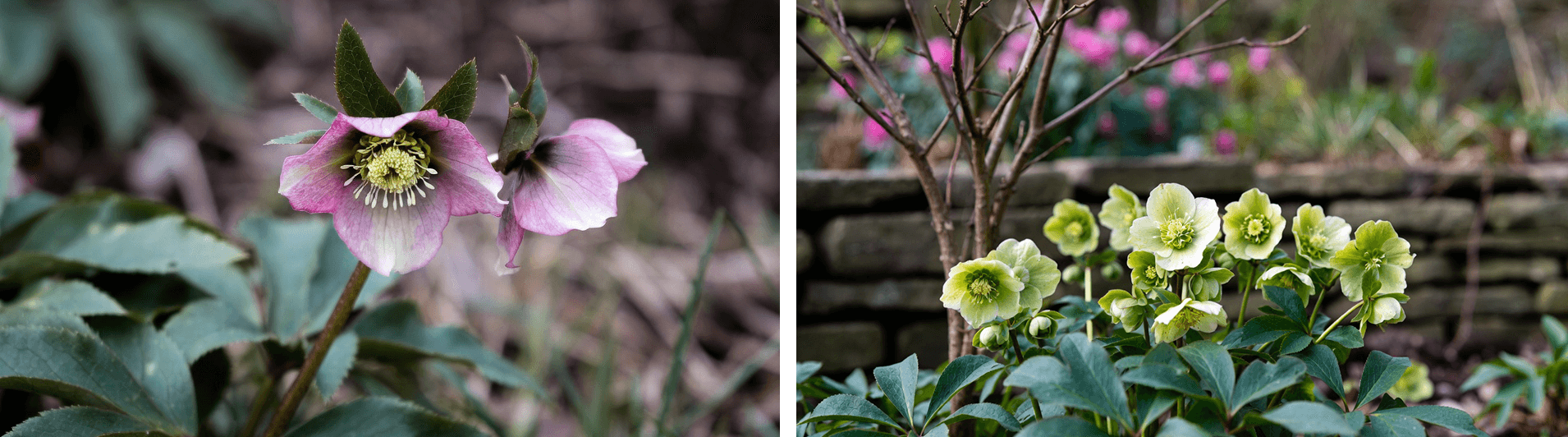
Hellebores flowering through winter, providing reliable colour in cold weather when many other plants are dormant.
Avoid planting tender species in dips or exposed spots, and position them near south-facing walls for extra warmth. Evergreen hedges or windbreaks can create sheltered microclimates that reduce frost severity across the garden. Over time, regular additions of organic matter will enrich even challenging soils, helping roots establish strongly. When mulching with nutrient-rich materials, keeping mulches clear of stems reduces the chance of softening and disease around the base.
Common Questions About Frost Protection
When should I cover plants for frost?
Cover in the evening before a frost's forecast, ideally before dusk while there's still warmth in the soil, then uncover the next day once it climbs back above freezing. Leave covers on through mild spells and you'll trap damp and cut out light, which does more harm than good.
What's the best material to protect plants from frost?
Horticultural fleece is the best all-rounder because it's breathable, reusable, and lets light and air through. Don't drape plastic or bubble wrap straight over foliage, as it traps moisture and invites rot. Bubble wrap is genuinely useful, but for insulating the sides of pots rather than covering the plant itself.
Should I water plants before a frost?
If the soil's genuinely dry, a morning watering can actually help, because moist soil holds warmth better than dry soil overnight. What you want to avoid is soaking already wet ground, or leaving pots standing in water. Cold and wet together are far harder on roots than cold on its own.
My plants look frost-damaged. Should I cut them back?
Usually it's best to hold off. Blackened tips look alarming, but cutting back too soon strips away growth that might still recover and leaves the plant exposed to the next frost. Wait until spring, when fresh growth shows you clearly what's died and what's pulled through.
Ready for the Cold Season
With a bit of preparation and half an eye on the forecast, most gardens come through the frosts with barely a scratch. And there's a real quiet satisfaction in it, watching your plants hold their own through the worst of the cold and stand ready for that first rush of growth when the warmth finally comes back.
Worried about frost damage this season or want tailored advice for your garden? If frost is forecast tonight you can still act quickly. Move tender pots into shelter, insulate containers, then cover soft new growth before dusk and remove covers once the day warms up. If you spot blackened tips the next morning, it is often best to wait before cutting back. New growth can show what is truly damaged once temperatures rise.