
Why Winter Is the Best Time to Plan a Garden Redesign
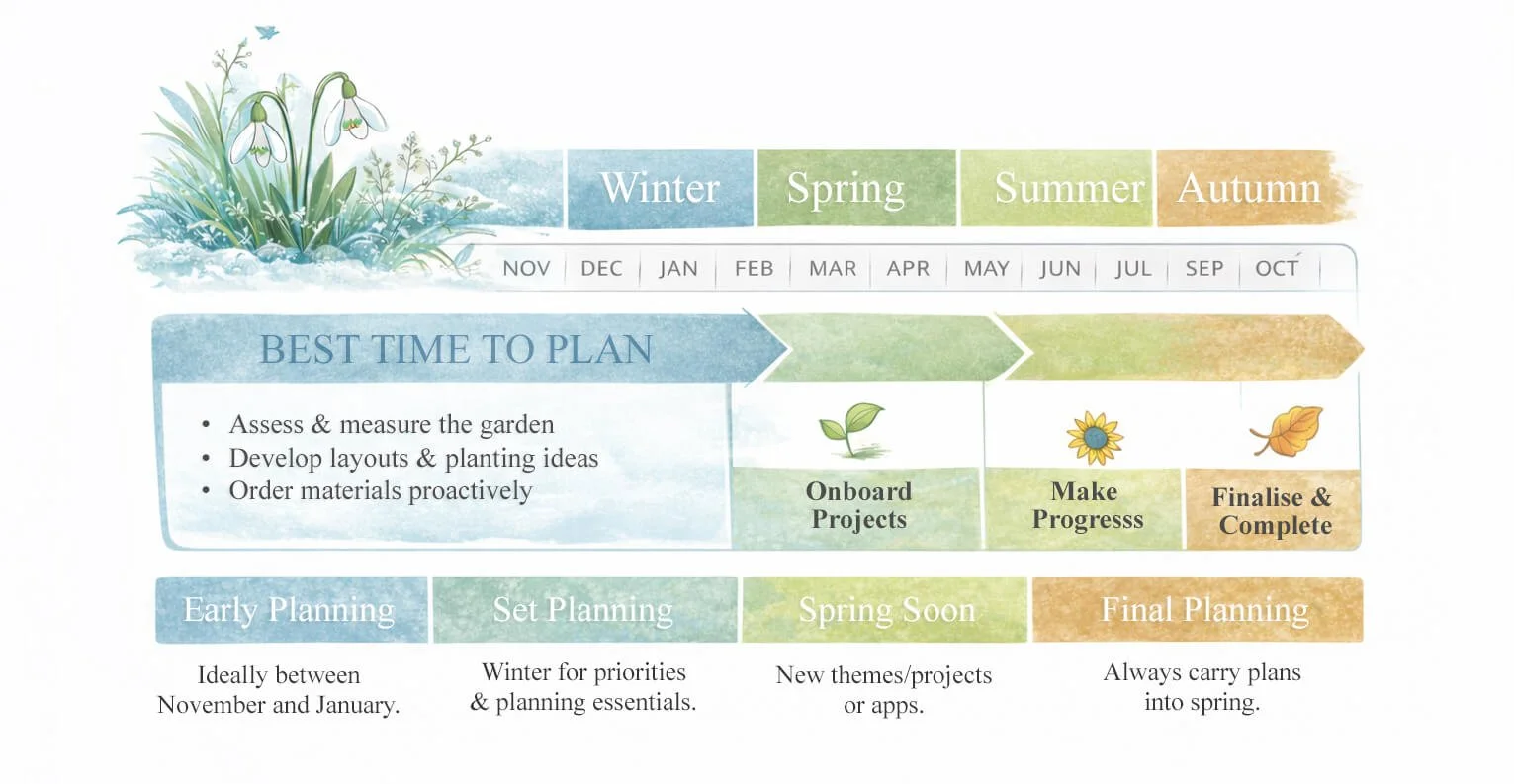
If you have plans for a new or refreshed garden in Buckinghamshire or the wider Chilterns this coming year, winter is often the most practical time to start planning. Spring has a habit of arriving all at once. Designers fill their diaries, contractor availability tightens, and lead times for materials can suddenly feel much longer. Beginning now, while the garden is quieter and there is more thinking space, allows you to approach the project calmly and thoughtfully, whether you intend to design it yourself or work with a professional such as our team at Vivid Gardens.
Winter also shows you the garden more honestly. With borders cut back and trees bare, the permanent shape of the space becomes easier to read. Views from indoors are clearer, awkward gaps stand out, and practical issues such as poor drainage, exposed corners, and limited light are much easier to spot. That makes winter the right moment to assess the site properly, shape the design around real conditions, and line everything up for work once conditions are suitable.
Seeing Your Garden with Fresh Eyes
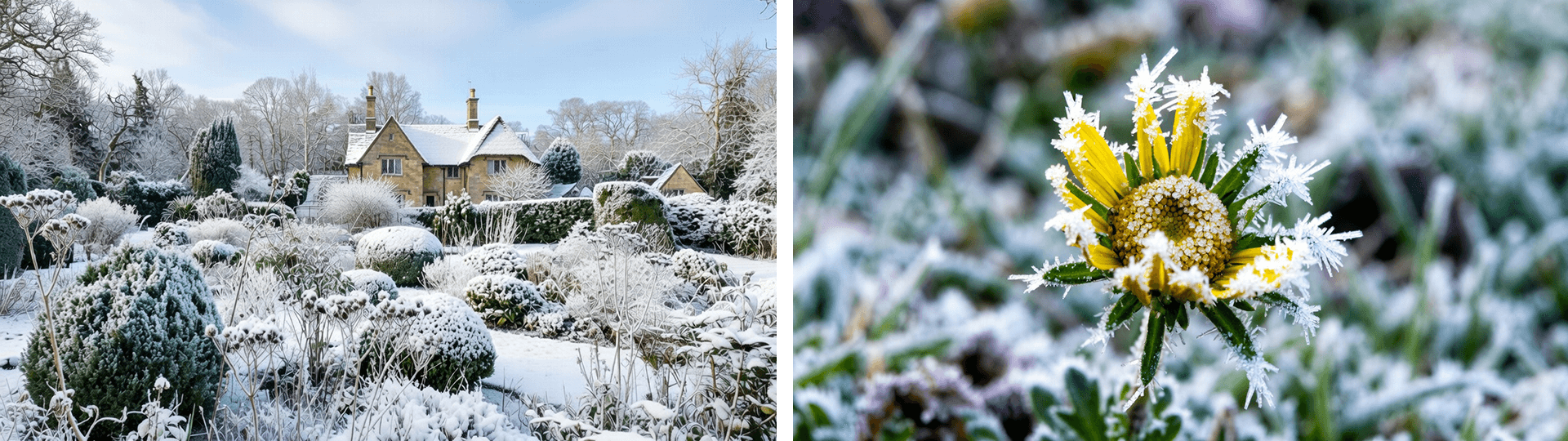
Winter views can reveal layout, structure, and drainage clues that are easy to miss in summer growth. Frost detail can also help you spot exposed areas and microclimates.
With leaves down and borders dormant, winter strips the garden back to its framework. Paths, boundaries, levels, and key sightlines become easier to judge. It is also the season when wet patches, runoff, frost pockets, and cold winds tend to make themselves known. Those are not minor details. They influence planting, drainage, material choice, and how comfortable the garden will feel in everyday use.
Use this quieter period to walk the garden after rain, on a bright day, and again from inside the house. Note where water lingers, where surfaces stay slippery, which areas feel overlooked, and where the light actually reaches in the middle of the day. Winter sun sits lower, so it gives a useful picture of the parts of the garden that are consistently short of light. It is still worth comparing those notes with spring or summer photographs before making final planting decisions.
Take photographs from every angle now, both close up and from key viewpoints indoors. Wide shots help with layout planning, while close ups help you remember drainage issues, worn edges, failing fences, or awkward corners that deserve a better solution. If possible, keep a few spring or summer photos as well so planting decisions are not based on winter views alone.
Preparing a Strong Brief

A strong winter brief links site measurements and layout ideas with practical material choices, helping reduce revisions before work begins.
If you decide to hire a designer, the information you gather in winter becomes a far stronger starting point for a clear brief. Good design is not just about style. It depends on accurate measurements, clear priorities, and a realistic understanding of the site. That means recording boundary lengths, existing trees, manholes, taps, service points, overhead cables, changes in level, and any areas where access is tight. Before any digging begins, it is also worth running a free check with LinesearchbeforeUdig to confirm what lies beneath the surface.
It is also worth identifying your soil early. Clay, chalk, sand, and loam all behave differently, especially in winter. Soil texture, drainage, and pH all influence which plants are likely to thrive and how the garden should be built. If part of the garden stays wet for long periods, that may call for a different planting approach, a revised layout, or raised beds and targeted soil improvement rather than simply more planting.
Then come the priorities. Think about how you want to use the garden in daily life, not just on the best summer weekend. Dining, children's play, drying space, access to bins, storage, privacy, wildlife value, and ease of maintenance all matter. A strong brief separates must haves from nice to haves and makes trade offs easier when space, budget, or timing are limited.
Taking Time Over the Design Process and Avoiding the Spring Rush
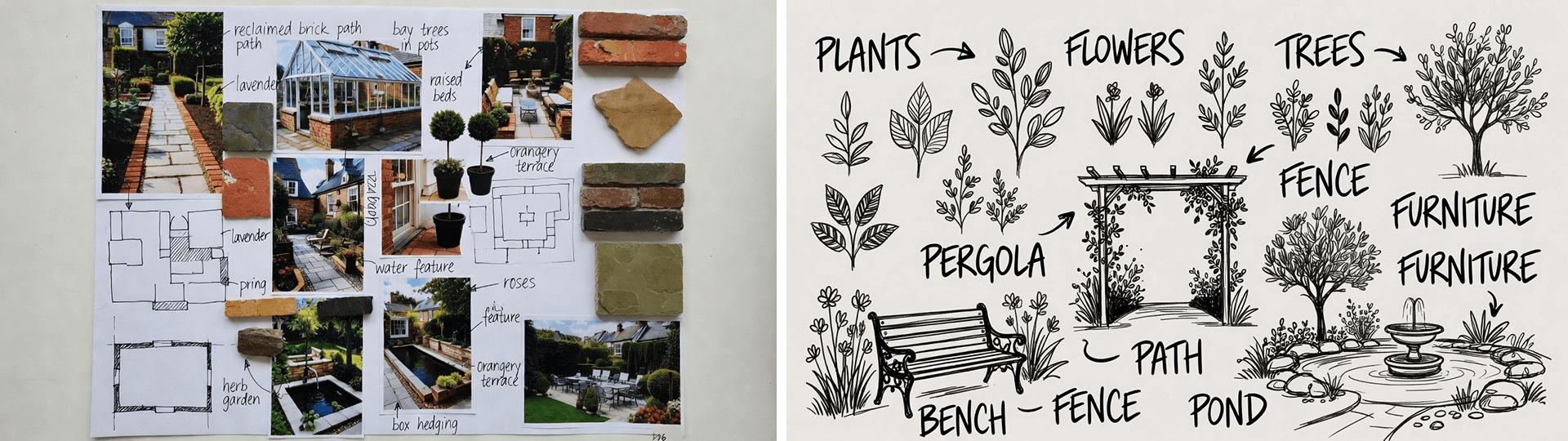
Winter planning allows time to develop layouts, mood boards, and planting ideas calmly, refining details such as materials, structures, and planting combinations before work begins in spring.
One of winter's biggest advantages is time. A well considered garden redesign rarely happens in one quick step. There is usually an initial survey, early ideas, revisions, material decisions, planting discussions, and practical checks before anything is ready to build, much like the stages we walk clients through in our own design process. Starting in winter allows that process to unfold properly, with room to refine the details rather than signing off a plan in a rush because spring is already around the corner.
Starting early can also help with scheduling and procurement. It does not mean winter always makes a project cheaper or faster, and it is sensible not to overclaim that. What it often does mean is more choice, fewer avoidable delays, and a better chance of having designs, specifications, and orders in place before peak demand arrives.
Winter can also open up practical planting opportunities. Many trees, shrubs, roses, and hedging plants are available bare root between late autumn and early spring, and structural planting is often easier to organise early while plants are dormant. That can be especially useful where screening, boundary planting, or the overall framework of the garden forms part of the redesign.
What winter cannot do is remove the need for judgement on site. Hard landscaping can often proceed in winter, but very wet ground, prolonged frost, or saturated clay can slow work or make it better to wait. A good plan acknowledges that reality and builds in flexibility rather than pretending every part of every build is ideal in mid winter.
Top 5 Winter Planning Essentials
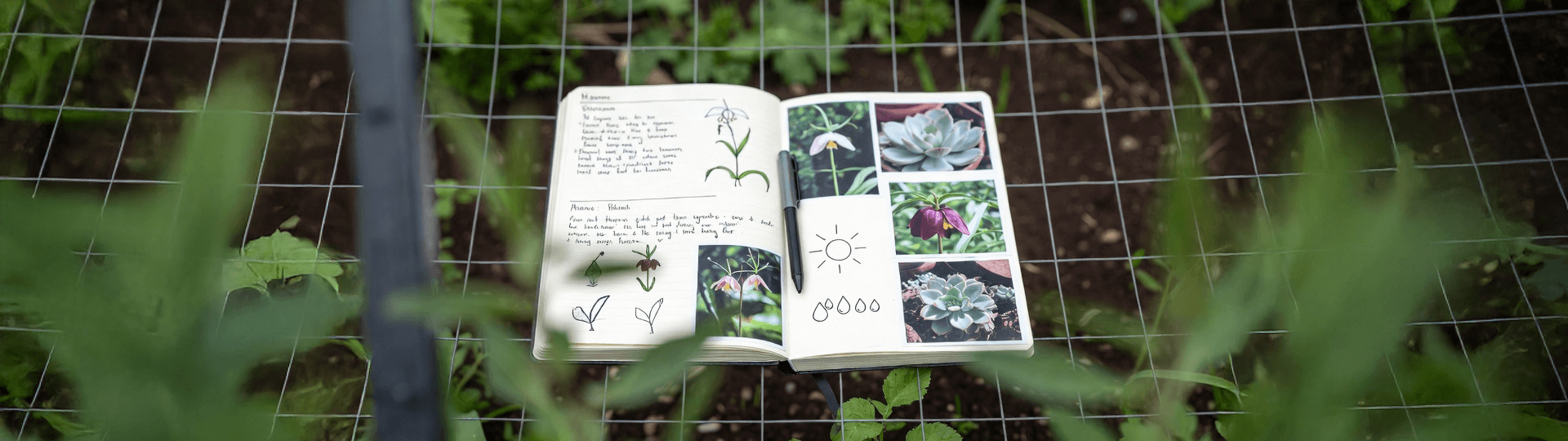
If a garden redesign is on the cards, prioritise these key steps during the quieter winter months, when it is easier to assess the space honestly and make well informed decisions. A useful order is water and drainage first, soil and light second, then layout, materials, and planting choices.
| Winter planning task | What to record | Why it matters | Practical notes and common mistakes to avoid |
|---|---|---|---|
| Photograph the bare garden from every angle, doorway, and window | Wide shots of the garden, boundaries, key indoor views, awkward corners, and close ups of problem areas. Shoot in both dry and wet conditions. | Bare winter views reveal the true structure: gaps, awkward proportions, and features summer growth hides. They also give a reliable reference for sketching layouts or briefing a designer. | Shoot from eye level and from the main seating or kitchen view. Keep a few summer photos too, so planting is not judged on winter alone. |
| Measure accurately and record all fixed elements | Overall dimensions, distances between features, and the positions of drains, manholes, trees, walls, fences, taps, and overhead cables. Note level changes near the house and across paved areas, plus soil type and likely service runs. | Accurate measurements and levels stop layouts working only on paper. Catching them early prevents drainage faults, spec changes, and rework. | Measure twice and mark your reference points. Skipping level changes is common, and then paving falls or step heights do not work. Confirm service routes before digging rather than trusting memory. |
| Track sunlight and shade over several days | Where sun falls morning, midday, and late afternoon, and which areas sit in deep shade, dappled shade, or full light. Note shade from buildings, evergreens, and fences. | Low winter sun shows where light is consistently poor. That drives seating, planting, and how well plants establish. | Record it alongside drainage notes, since shade plus wet soil narrows planting options. Note frost pockets and exposed corners too. Cross check with summer photos before finalising planting. |
| List your priorities clearly and realistically | How you will use the garden now and later: dining, play, growing food, privacy, low maintenance, storage, wildlife. Rank them in order. | Clear priorities guide layout and materials and stop a design doing too much, which matters most when space or budget is tight. | Separate must haves from nice to haves, and check who uses the garden and when. Designing for one occasional use often neglects daily access, drying, bin routes, and upkeep. |
| Identify existing issues that need resolving | Soggy patches, standing water, exposed corners, overlooked spots, failing fences, poor circulation, and slippery surfaces. Note how long wet areas stay wet. | Winter makes functional problems easier to spot. Fixing them early improves how the garden works, not just how it looks. | Tell temporary saturation from persistent waterlogging. Water gone in a day or two is usually seasonal; ground that stays wet points to drainage and can affect planting, layout, and timing. |
Common Questions About Winter Garden Planning
When should I start planning
Ideally between November and January. This gives time for site assessment, design development, revisions, and early ordering before spring demand peaks. If you miss that window, winter planning can still be worthwhile, though lead times and installer availability may be tighter.
Can structural work happen in winter
Often yes, particularly for paths, patios, walls, drainage improvements, and other hard landscaping. The main limitation is not the calendar itself but site conditions. Frozen ground, prolonged rain, and persistently waterlogged soil can all slow progress or affect the finish, especially on heavier soils. A well run project stays flexible and protects the soil and existing planting where conditions are poor.
What if I am designing the garden myself
Start with honest site notes before you choose plants or materials. Measure carefully. Photograph the space well. Track light and wet areas. Identify the soil. Record levels and fixed features. Once that groundwork is done, it becomes much easier to test layouts, shortlist suitable plants, and avoid ideas that only work on paper.
Is winter a good time to think about planting
Yes, especially for the structural planting that gives a garden shape in every season. Winter is also the bare root season for many trees, shrubs, and hedging plants, which can be a cost effective way to establish framework planting. Just avoid planting when the soil is frozen or waterlogged, and make sure the planting choices suit the actual light and drainage conditions on site.
What's Next After Your Winter Planning?
Once the groundwork is done, the rest of the project becomes calmer and more coherent. Layout decisions become easier. Planting choices become better matched to the site. Budgets become easier to phase. Whether you are designing the garden yourself or working with a professional, winter planning gives you the best chance of heading into spring with a clear brief, realistic priorities, and fewer surprises once work begins.
While the bones of the garden are on show, it is also a good moment to enjoy the quieter season itself. Our guide to festive winter garden ideas and the best plants for winter interest can help the space feel good now, not just once spring arrives.
If you would like support at that stage, a winter consultation can help turn early observations into a practical, well considered plan shaped around how a Buckinghamshire or Chilterns garden really works.
Where to go next
Interested in any of these ? The articles below go deeper into planting ideas for winter interest, heavier soils, and changing weather conditions.
| Article | Best for | Who it suits |
|---|---|---|
|
|
Adding structure, colour, and seasonal interest once the layout, light, and key views are clear | Anyone using winter to plan planting that complements the garden’s structure rather than competes with it |
| Improving drainage and root conditions on heavy clay when a redesign involves new beds or levels | Gardeners on clay planning structural changes who want beds that cope through wet winters | |
| Choosing planting matched to winter wet, summer dry spells, and more exposed sites | Anyone planning around drainage concerns or changing conditions who wants resilient long-term planting |