
Garden Lighting Ideas for Buckinghamshire Gardens
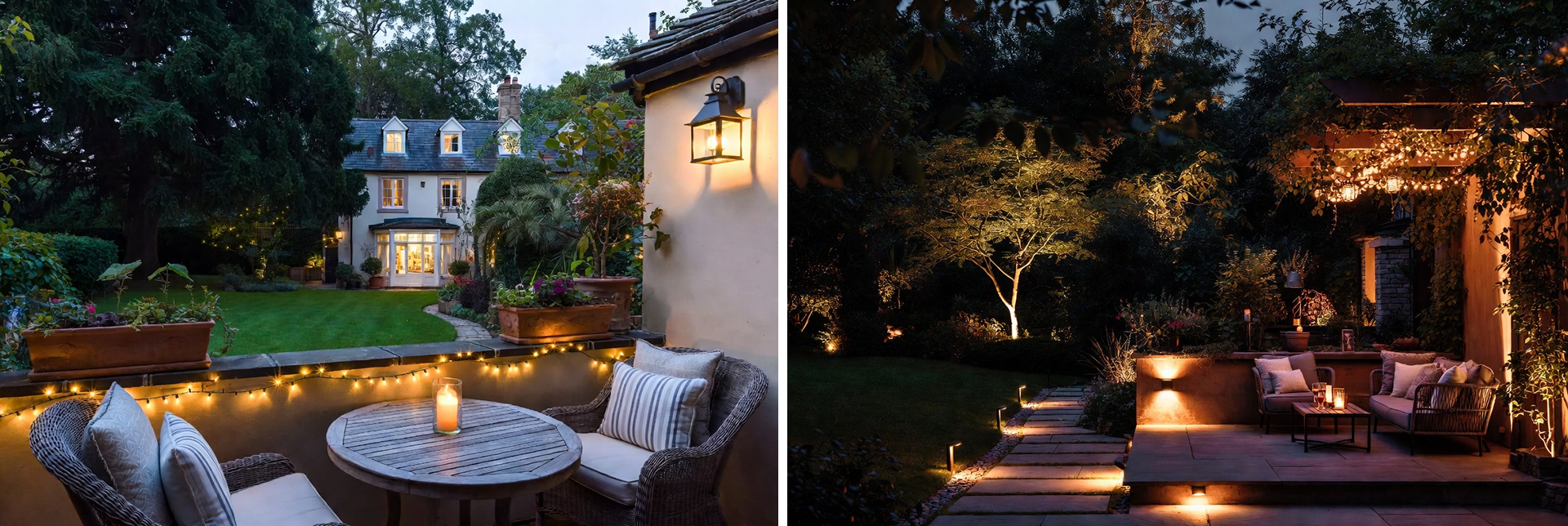
Good garden lighting does four jobs. It makes paths and steps safe, it keeps terraces usable after dark, it gives trees and planting depth, and it leaves much of the garden gently unlit. For most Buckinghamshire gardens, that means warm white light around 2700K, fewer fittings than you might expect, and careful placement rather than sheer brightness.
Imagine stepping out into your Gerrards Cross garden at dusk, only to find the beauty you have carefully created fading into shadow before the evening has truly begun. Even the most beautifully planted garden can feel abruptly closed off once the light fades, particularly in larger plots where depth, structure, and planting quickly disappear.
This guide covers how to light paths, terraces, trees and planting, how to choose the right colour temperature and power options, the mistakes that flatten a garden instead of enhancing it, and what shapes the cost of a well-designed scheme.
What well-planned garden lighting achieves
Thoughtful lighting works much like good planting or layout. It supports how the garden is used rather than drawing attention to itself.
In practical terms, well-considered lighting can:
Extend the use of terraces, seating areas, and dining spaces into the evening
Improve safety along paths, steps, and level changes without harsh glare
Reveal planting, trees, and textures that would otherwise disappear at night
Add depth and structure when the garden is viewed from inside the house
In many gardens across Gerrards Cross, Beaconsfield, Amersham and the wider Chilterns, where plots are generous and planting is mature, fewer lights placed carefully will almost always feel more refined than a scheme that attempts to illuminate everything.
Think in layers, not individual lights
Professional lighting schemes are built in layers rather than fitting by fitting. Three layers cover almost every garden.
Functional light keeps people safe and oriented. It belongs on paths, steps, entrances and changes of level, kept low and shielded so it guides without glare.
Feature light gives the garden its depth after dark. A single uplight on a mature tree, a wash of light across a brick wall or a glow through ornamental grasses does more for atmosphere than a dozen scattered fittings.
Atmospheric light makes the garden somewhere you want to sit. Warm, dimmable light around seating, dining areas and pergolas turns a terrace into an evening room.
A successful scheme combines all three and resists making every fitting equally bright. If one layer is going to lead, let it be the feature layer, with functional light kept quiet and atmospheric light kept warm.
How to light different parts of the garden
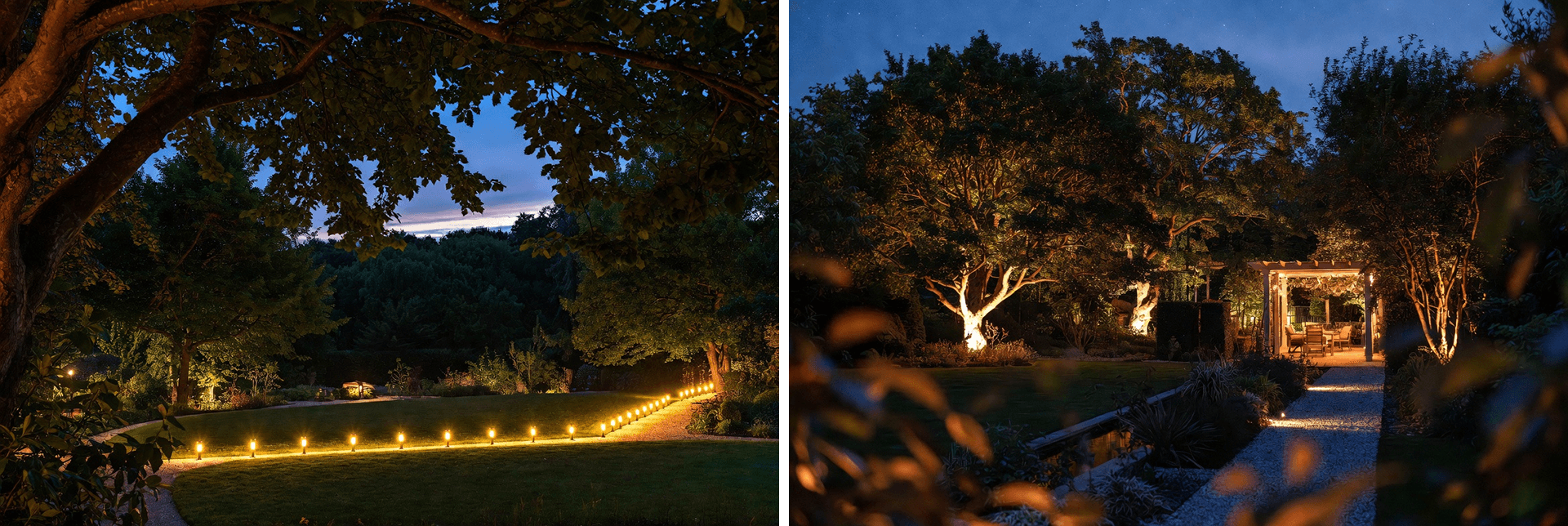
Rather than choosing fittings in isolation, it helps to think about where light is needed first and how it supports the way the garden is actually used. The table below brings together common garden areas with the types of lighting that tend to work best for each.
| Garden Area | Best Lighting Type | What It Delivers | Pro Tip for Buckinghamshire Gardens |
|---|---|---|---|
| Borders & off-grid areas | Solar or battery-powered accent lights | Gentle glow in hard-to-wire spots | Solar tends to underperform under the mature tree canopy common on larger plots here, so favour good quality battery fittings, or run a low voltage cable where you can. Use them for accents, not coverage. |
| Driveways & entrances | Bollard lights or low wall lights | Defines arrival and improves safety | Pick discreet fittings that mark the edge of a gravel drive and the gateposts rather than flooding the whole approach. Understated reads better and avoids an overly commercial look. |
| Key planting features | Low spotlights or adjustable accents | Highlights focal plants without lighting the whole border | Choose one or two specimen plants to light and leave the rest in soft shadow. Restraint reads as expensive, and lighting every border flattens the depth. |
| Mature trees & tall shrubs | Uplights or discreet spotlights | Adds height, texture, and drama after dark | Mature specimen trees are a real asset in many Buckinghamshire gardens, so make them the focal points. Conceal fittings at the base and angle up across the trunk, and shield them so light lifts the canopy rather than spilling into the sky or a neighbour's garden. |
| Paths & steps | Recessed path lights or step LEDs | Guides movement safely without a runway effect | Keep it low, evenly spaced and warm in tone. Light the surface rather than people's eyes, and skip bright white so the route feels calm. |
| Pergolas & structures | Downlights or thick-cord festoon lighting | Creates intimate atmosphere and enclosure | Use warm bulbs and thicker cord festoon that blends into the structure by day. Downlights tucked into the frame give a cleaner look than strings alone on a smart terrace. |
| Seating areas & terraces | Downlights, wall lights, festoon strings | Turns the space into a comfortable evening room | Favour reflected or overhead light over direct glare, and warm 2700K tones for the cosiest feel. Put it on a dimmer so one space can flex from supper to a quiet nightcap. |
| Water features & reflections | Submersible or underwater LED spots | Creates soft shimmering reflections after dark | Use sealed low voltage units and angle them to bounce light off the surface rather than glaring up from the base. A little goes a long way, and still water reflects best. |
What colour temperature is best for garden lighting?
For most residential gardens, warm white light between 2700K and 3000K is the best choice. It flatters planting, brick, timber and natural stone, while cooler light above 4000K tends to look harsh and flatten texture.

Warm 2700K lighting creates a soft, golden glow that flatters planting and natural materials, making the garden feel cosy and inviting after dark. Cooler temperatures (4000K+) can appear harsh and flatten textures
When choosing garden lighting, brightness is often the first thing people think about. In practice, the colour of the light can be just as important, and it’s something many homeowners are not aware they have control over.
This colour is measured in kelvin (K). The number does not describe how strong the light is, but how warm or cool it appears. Most outdoor lights will list a kelvin rating on the packaging or in the specifications, even if it isn’t always clearly explained.
Getting this choice right can make a significant difference to how a garden feels after dark.
Warm white light (around 2700K) produces a soft, golden glow similar to candlelight or traditional bulbs. It is generally the most flattering option for planting, brickwork, timber, and natural stone, helping colours appear rich rather than washed out.
Cooler light (4000K and above) appears whiter and brighter, but can feel harsh in residential gardens and often flattens planting rather than enhancing it.
For most Buckinghamshire gardens, choosing warmer light temperatures helps preserve the garden’s character and creates an atmosphere suited to relaxing and entertaining, rather than purely functional use.
How do you light plants and trees without overpowering them?
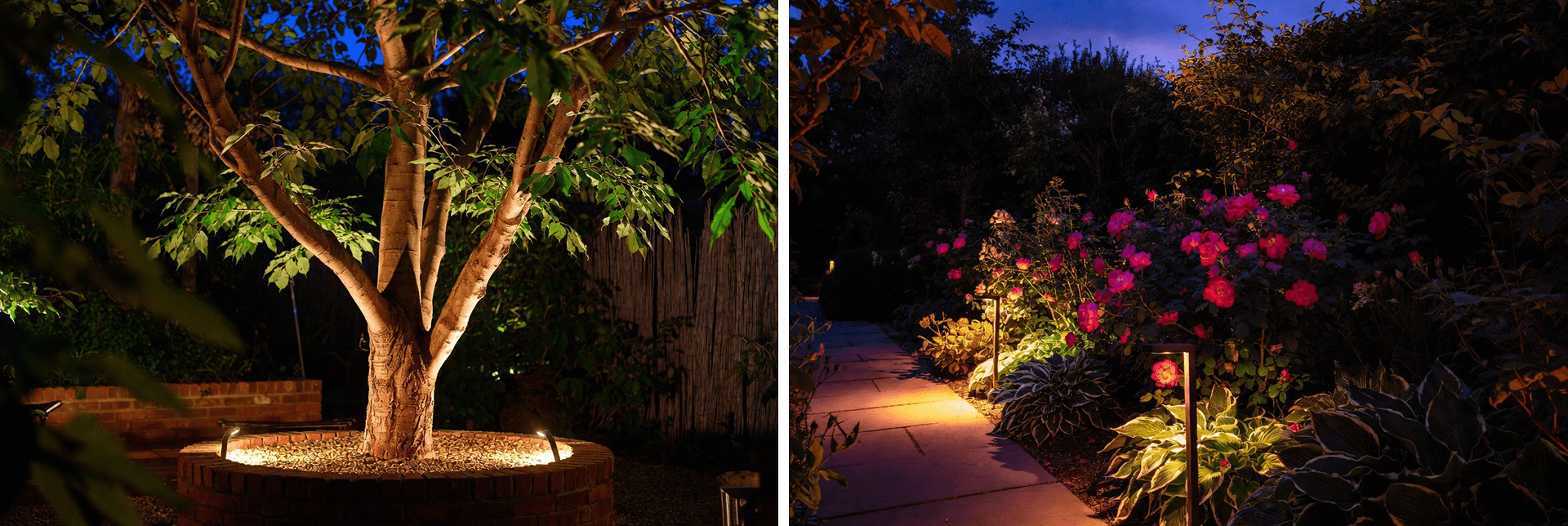
The most effective garden lighting does not try to reveal everything at once. Instead, it works by suggestion, allowing parts of the garden to emerge gently from the darkness in a way that feels natural and welcoming.
A few simple principles consistently create the best results:
Light-coloured foliage reflects illumination easily and needs only a soft touch
Warm uplights placed at the base of mature trees lift height and reveal bark and branch structure
Backlighting shrubs and trees adds depth and creates elegant silhouettes after dark
Evergreen structure, ornamental grasses, seed heads, and textured trunks provide quiet interest through winter
Leaving some areas in shadow helps the lit spaces feel deliberate rather than overworked
This restrained approach creates a calm, atmospheric garden that often reveals forms and textures not always noticed in daylight. It is a subtle way to let the garden remain engaging and beautiful long after the sun has gone down.
Design the view from inside the house
For much of the year, a Buckinghamshire garden is seen more often through glass than from a terrace. Kitchen windows, bifold doors and living rooms frame the garden all evening, and in winter they are often the only vantage point.
Design the night-time view with the same care as the daytime one. Stand at your main windows after dark and decide what you would like to see. A single uplit tree at the end of a lawn, a softly washed wall or the silhouette of winter structure can turn a black window into a living picture, and it works every evening of the year whether or not anyone steps outside.
This is also where restraint pays off. A garden lit evenly from the house looks flat, while one or two considered focal points draw the eye outwards and make the space feel deeper than it is.
Which power option is best for garden lighting?
As a rule of thumb, low voltage systems suit permanent schemes, solar suits open and sunny corners, and rechargeable battery lights fill the shaded gaps in between.
Not every corner of a garden sits conveniently near a power point, and in larger or more established plots, digging in new cables can feel like more trouble than it is worth. The good news is that you do not have to choose between beautiful evening light and keeping things simple and peaceful.
There are several gentle, flexible ways to bring light exactly where it is needed, with minimal fuss:
Low-voltage lighting systems, safe and easy to install, and adaptable as your garden grows and changes over time
Solar lights, best suited to open, sunny spots where they can quietly do their work without any wiring
Rechargeable battery-powered lights, reliable even in shaded areas or beneath pergolas, ideal for adding a soft glow without long-term commitment
Portable external battery units, useful for lighting seating areas, feature plants, or a favourite corner beneath a pergola, all without permanent cabling
When chosen with care, these solutions allow light to reach parts of the garden that might otherwise slip into darkness, gently extending evenings while keeping disruption to a minimum.
Automated and smart lighting options
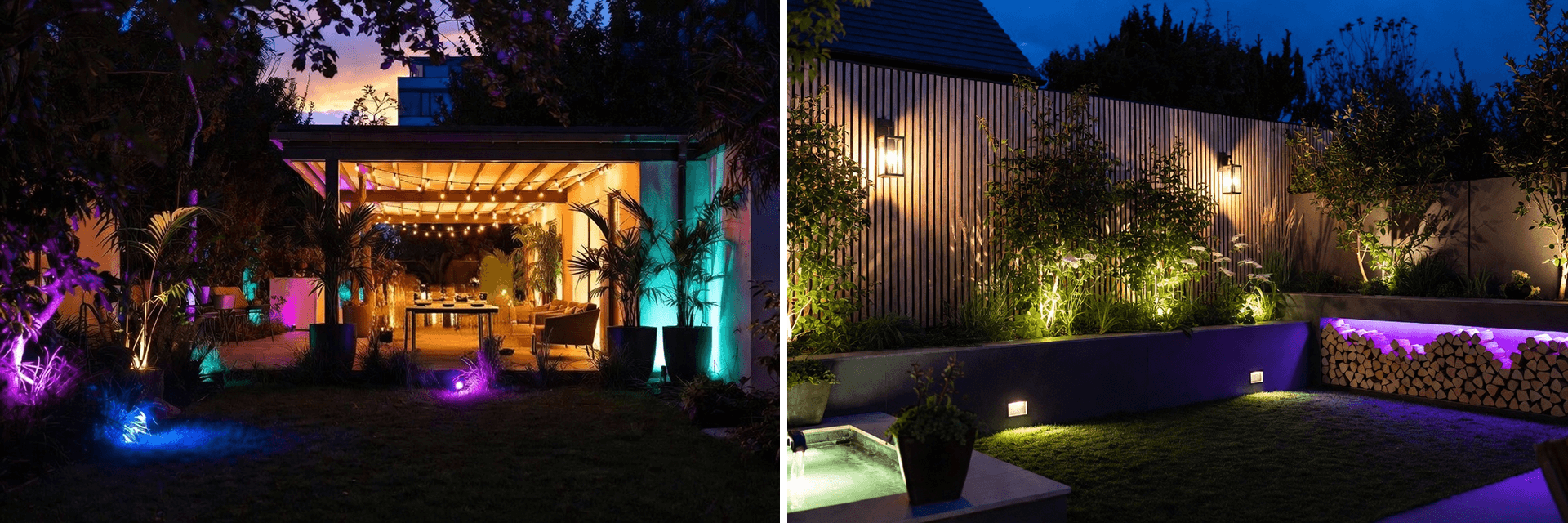
Imagine your garden lighting coming alive automatically at dusk, with brightness and colour easily adjusted for quiet nights or lively gatherings. Smart systems make it beautifully effortless.
For homeowners who want their garden to feel welcoming after sunset without extra effort, smart lighting offers a flexible and intuitive solution. Systems such as Philips Hue allow lights to be adjusted and scheduled easily, without changing the garden layout or constantly resetting fittings.
With smart lighting, it becomes possible to:
Set gentle timers so the garden comes to life automatically at dusk
Adjust brightness and light temperature to suit the mood, from cosy evenings to brighter gatherings
Create simple scenes for special occasions, such as soft amber light for dinner or a warmer glow for quiet nights outside
Adapt lighting naturally as daylight hours change through the seasons
When used thoughtfully, smart lighting remains subtle rather than showy. Warm, restrained settings tend to feel far more natural and inviting in residential gardens than bold colour changes. The result is a space that feels calm, welcoming, and ready to be enjoyed whenever the evening begins.
Common garden lighting mistakes to avoid
Most disappointing garden lighting comes down to the same handful of mistakes.
• Lighting everything equally, which creates glare and flattens the garden’s depth
• Choosing cool white light above 4000K for areas meant for relaxing
• Spacing path lights in a rigid row that reads as a runway
• Leaving fittings exposed, so you see the lamp rather than what it lights
• Relying on solar alone in shaded or north-facing corners, where winter performance drops away
• Treating security lighting and garden lighting as one scheme
• Forgetting how the lit garden looks from inside the house
Every one of these is avoidable at the planning stage, which is why it is worth deciding how the garden will actually be used before a single fitting is bought.
Lighting, neighbours and the Chilterns night sky
The Chilterns National Landscape counts dark skies among its special qualities, and its lighting guidance asks for light to be used only where and when it is needed. That principle also happens to produce the most beautiful gardens.
In practice it means aiming light downwards, shielding fittings, using timers so the garden is not lit all night, keeping brightness modest and deliberately leaving areas dark. Restraint protects nocturnal wildlife, keeps light from spilling into neighbouring homes, and gives the lit parts of your garden far more impact against genuine darkness.
What does garden lighting cost in Buckinghamshire?
There is no single answer, because cost depends far more on the design than on the fittings. The main drivers are the size of the garden, the number of fittings, the length and complexity of cable runs, whether any excavation or hard landscaping is involved, the quality of the fittings themselves, and whether lighting is installed as part of a wider garden project or added afterwards.
Two things are consistently true. Design-led schemes with fewer, better placed lights usually cost less than attempts to illuminate everything. And lighting planned alongside a wider landscaping project is almost always cheaper and neater than lighting retrofitted later, because cable routes go in before surfaces are finished. Any mains work should always be carried out by a qualified electrician.
Garden lighting FAQs
What colour temperature is best for garden lighting?
Warm white light around 2700K suits most residential gardens. It gives planting, brick, timber and stone a soft, natural appearance, while cooler light above 4000K can look harsh and flatten texture. If in doubt, choose the warmer option for any area where you will sit or dine.
How do you light a garden path without creating glare?
Light the route, not the eyes. Use low, shielded fittings, aim light down or across the surface, and make steps and level changes clear. Avoid evenly spaced bright fittings, which create a runway effect. Overlapping pools of gentle light guide people more comfortably than a continuous bright line.
Are solar garden lights good enough for UK gardens?
Solar lights work well as light-touch accents in open, sunny spots. In shaded or mature gardens, and anywhere you need dependable light on winter evenings, such as steps and dining areas, a low voltage or professionally installed system is more reliable and controllable.
How do you light a mature tree?
Place a warm uplight low at the base, angled across the trunk so the light reveals bark, branches and canopy rather than the fitting itself. One well aimed light on a single specimen usually looks better than lighting every tree, and backlighting can create elegant silhouettes.
Will garden lighting disturb wildlife or neighbours?
It does not have to. Aim light downwards, shield fittings, keep brightness modest, use timers and leave parts of the garden dark. These habits protect nocturnal wildlife, stop light spilling into neighbouring windows and reflect the dark skies guidance for the Chilterns. Restrained schemes are kinder and more atmospheric.
When is the best time to plan garden lighting?
Alongside the wider garden design, before surfaces are finished. Planning early lets cable routes, fittings and controls be integrated invisibly rather than retrofitted. If your garden is already established, a lighting plan can still be added sensitively, ideally designed around how you use the space after dark.
Garden lighting in Gerrards Cross and across Buckinghamshire
In Gerrards Cross and across Buckinghamshire, the most successful garden lighting schemes quietly enhance what is already beautiful. Many established gardens here share the same character, with mature trees, generous plots and planting that rewards being revealed rather than floodlit. By choosing warmth, restraint, and thoughtful placement, lighting helps the garden feel welcoming and alive long after sunset, without ever taking over the space.
At Vivid Gardens, we see lighting as an integral part of the overall garden story, working alongside planting, layout, and how you truly want to use the space. You can explore a selection of our completed residential garden projects to see the design-led approach in practice.
If you’re thinking about lighting for your own garden, whether in Gerrards Cross, Beaconsfield, Amersham or anywhere across Buckinghamshire and the surrounding counties, an initial conversation is always free, and we’re genuinely happy to chat through ideas with you before any decisions are made.