
Chelsea-Inspired Gardens for Real Buckinghamshire Homes

Each May, the Chelsea Flower Show sets a high bar for planting and design. Working on gardens across Buckinghamshire, we have learned that the part which transfers best to a real plot is not copying a show border plant for plant. It is copying the order of decisions, so the garden looks intentional, settles in well, and does not become an expensive cycle of replacements.
Structure that guides the eye, layers of plants working together, and choices that keep interest going all year. These are the principles we return to on almost every local project, and they translate well to gardens around the county and the wider Home Counties. With a bit of planning and the right selections, you can create something sophisticated and inviting without overspending. The sequence we follow is always the same: structure first, then soil, then planting.
Garden Challenges and How Show-Garden Ideas Help
Gardens here can throw some real curveballs, and the challenge often depends on where in the county you are. Down in the Vale of Aylesbury and the lower lying clay areas, heavy ground can hold water through winter and stay cold well into spring. Up on the Chiltern chalk, the same border faces the opposite problem: soil that drains fast and runs short on moisture and nutrients by midsummer. Add late frosts, hungry deer or rabbits, and shade from mature trees or tall hedges, and it is easy to see why a border that looked fine in a pot can struggle once it hits the ground. Naming which of these you are dealing with is the single most useful thing you can do before spending a penny on plants.
A helpful first step is naming the main constraint in your spot. In many cases it is winter wet on clay, summer drought on chalk, or dry shade under trees. That one factor often decides what will thrive and what will always need extra input.
The good news is that modern show gardens are often built around the same pressures. Designers now lean towards resilient planting, lower input maintenance, and more sustainable choices, including peat free growing media. Two caveats keep expectations realistic. Peat free compost can behave differently, especially in containers, so watering and feeding may need small adjustments. And even resilient perennials usually benefit from steady care in their first growing season, particularly on chalk or in dry shade, before they feel genuinely low maintenance. Peat free mixes can also dry at a different pace in pots, which is covered in Garden Organic’s peat free growing guidance.
What Makes a Top Show Garden Truly Stand Out?

What lifts an award winning garden is rarely a long list of rare plants. It is harmony and clear intent. You get real depth from thoughtful layering, with taller plants anchoring the back, medium ones filling the middle, and low spreaders softening the edges. Big, generous groups of the same plant let colours and shapes flow naturally. Repeating just a few strong varieties creates quiet rhythm without fuss.
Hard landscaping stays simple and restrained, often just one or two good materials like natural stone or gravel used confidently. Evergreens and compact trees give structure through winter. A single clever focal point, maybe a water feature or piece of sculpture, pulls everything together. Lately, exhibitions have put sustainability and wildlife front and centre, alongside plants that cope well with changeable weather. All of it suits gardens in this part of the country.
Reliable Plants That Thrive in Buckinghamshire Soil
Plenty of perennials that steal the show in exhibition borders can settle in happily across the county. The trick is picking ones that match your spot, varieties that hold moisture for clay, or tougher drought tolerant plants for chalk. They can deliver that lush, drifting look with less effort once established.
On clay, the main risk is often winter wet around the crown. On chalk, the first summer can be the test unless you mulch well and water consistently while roots settle. Those differences often follow the underlying ground, which shifts noticeably between the Chilterns and the lower lying areas shown on the British Geological Survey map for Buckinghamshire.
Show-Garden Favourites: Features and Planting Guide
Here’s a handy guide to some reliable favourites, with their best qualities, ideal planting times, and tips suited to soils around here.
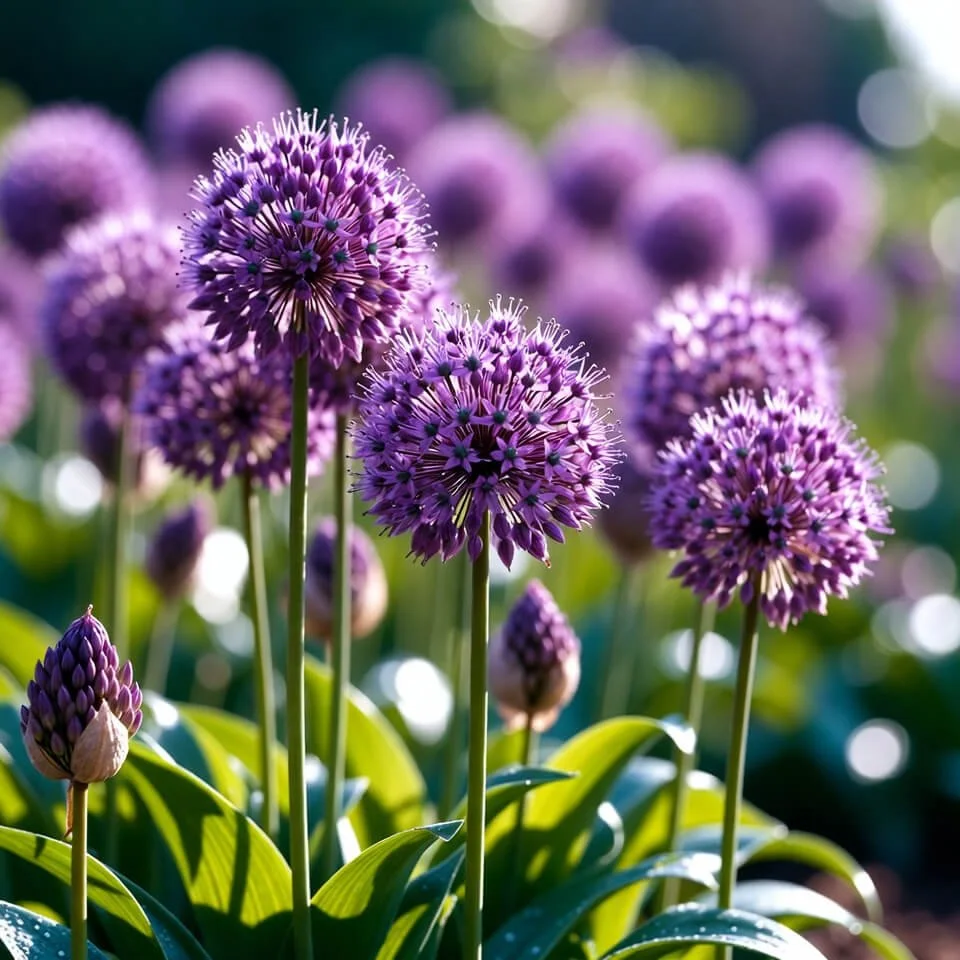


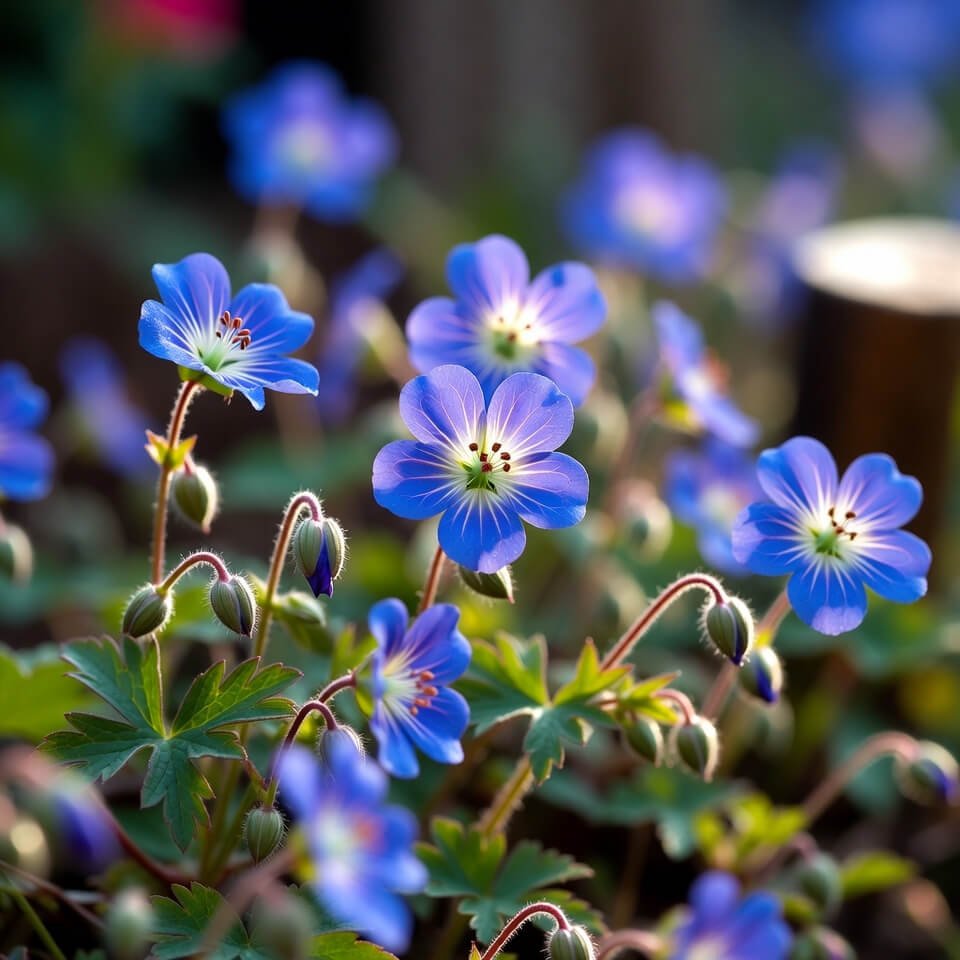
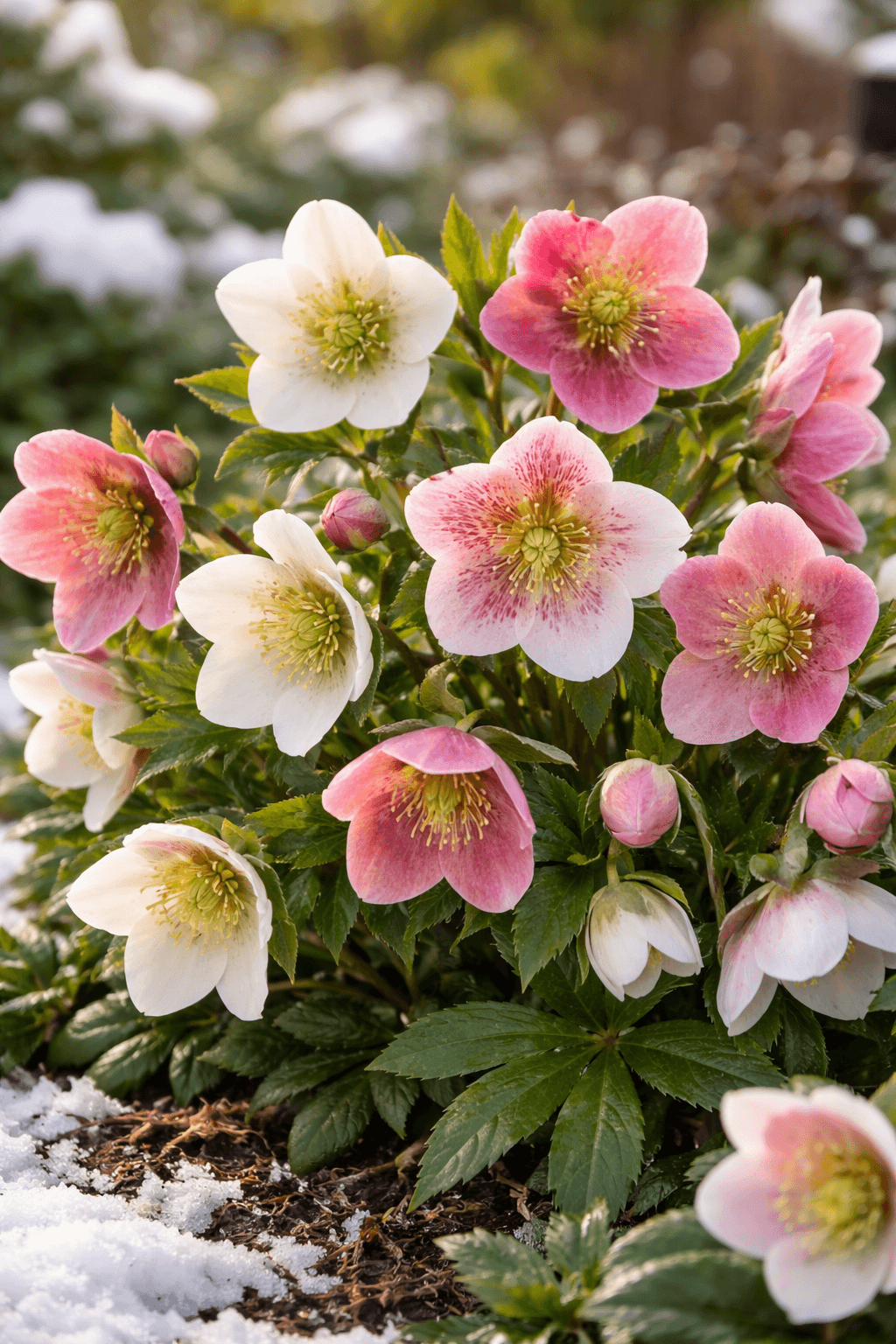
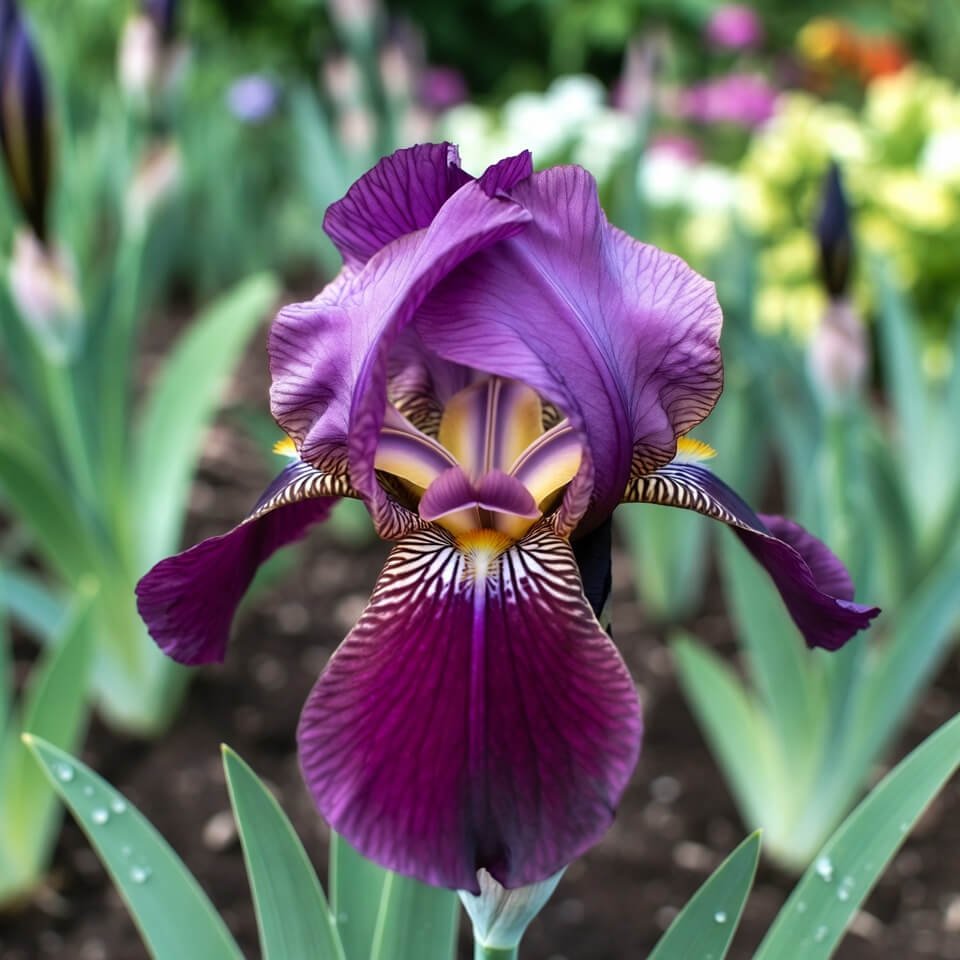

| Plant | Key Features | Best Time to Plant | Buckinghamshire Tips |
|---|---|---|---|
| Alliums | Spherical purple or white heads on tall stems, they can naturalise well. | Autumn (September to November) | Often grow well on chalk, and can also work on clay if planted deeply and not in winter wet spots. |
| Cornus (dogwood shrubs) | Brightly coloured winter stems that intensify after leaf fall. | Autumn to early spring | Coppice in late winter or early spring to encourage vivid new growth. |
| Foxgloves (Digitalis) | Towering spires in soft colours, ideal for dappled shade. | Spring or autumn | Often thrive on heavier soils, especially under trees or hedges. |
| Geums | Airy sprays of warm orange, red, and soft yellow over a long season, a modern show-border staple. | Spring or autumn | Dependable on clay once established. Reliable varieties include 'Totally Tangerine' and 'Mrs J. Bradshaw'. Divide every couple of years to keep them vigorous. |
| Hardy geraniums | Excellent weaving ground cover that can suppress weeds. | Spring or autumn | Usually tolerant and low maintenance on clay or chalk. |
| Hellebores | Evergreen foliage with nodding winter flowers from December to March. | Autumn or early spring | Often thrive on clay if drainage is improved with organic matter, and they tend to do well in partial shade. |
| Irises | Early season drama, with a wide choice of forms and colours. | Bearded types (July to September), Siberian types (spring or autumn) | Choose Siberian irises for clay, bearded types prefer freer drainage. |
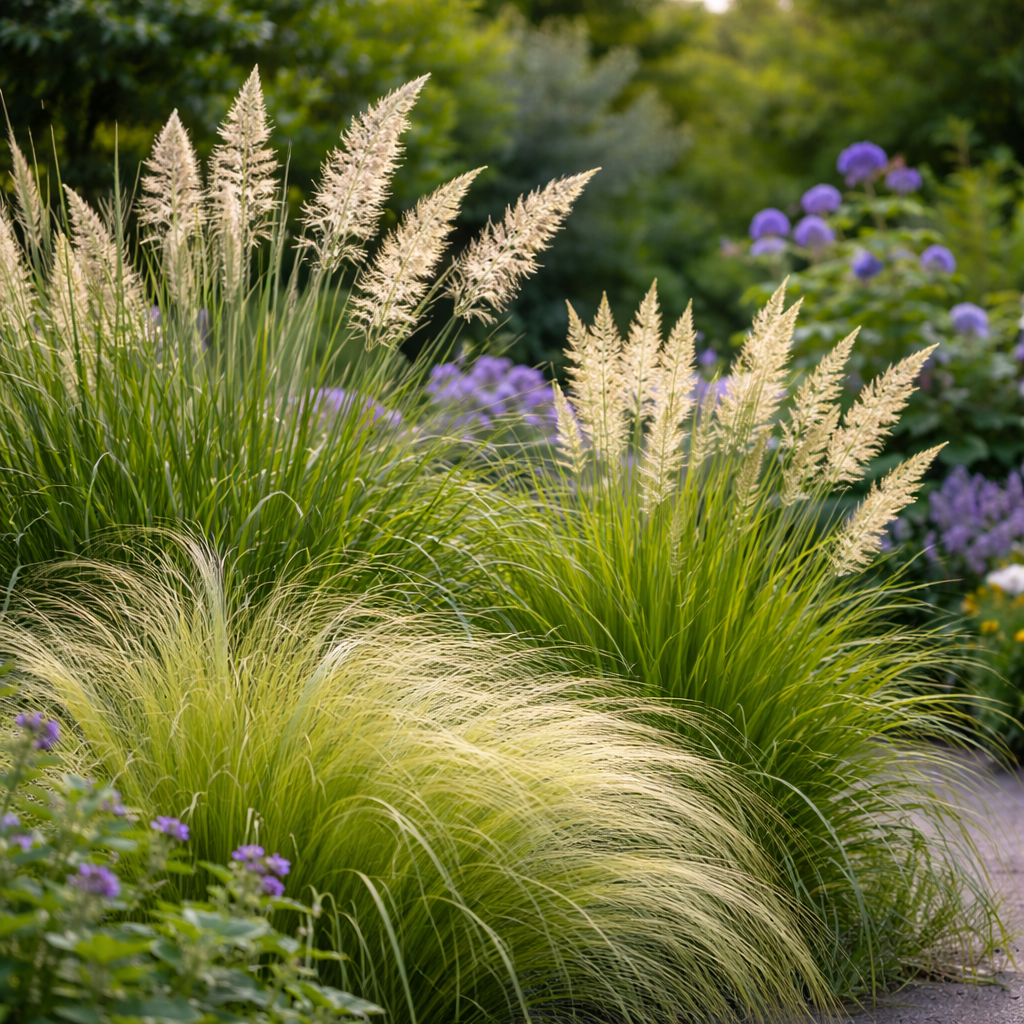
| Ornamental grasses (Miscanthus, Calamagrostis) | Movement and structure through all seasons. | Autumn for most, spring for larger Miscanthus | Often strong on clay and chalk, and leaving stems standing over winter can add structure and frost interest. |
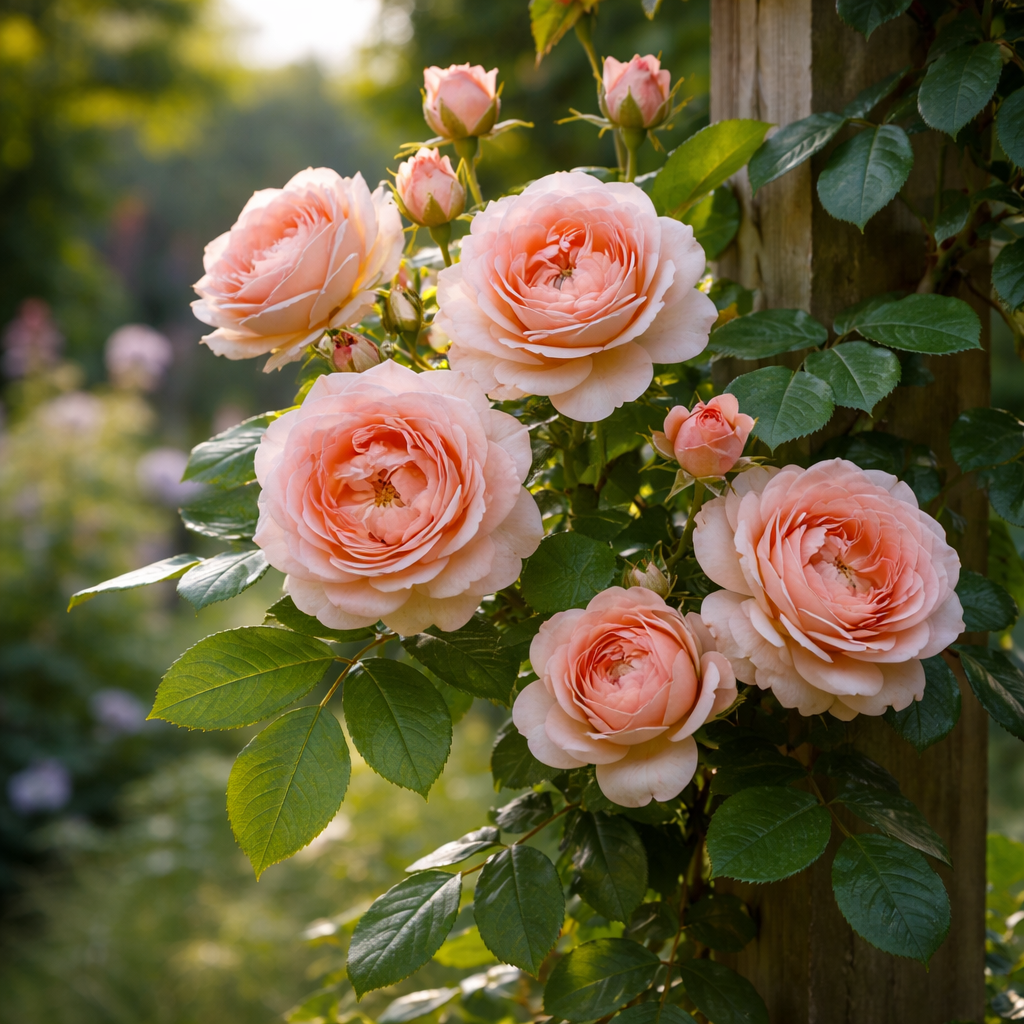
| Roses (modern shrub, climbing) | Fragrance and repeat flowering throughout summer. | Bare root (November to March), container grown (most of the year) | Clay can suit roses well. On chalk, adding organic matter can help with moisture holding. |
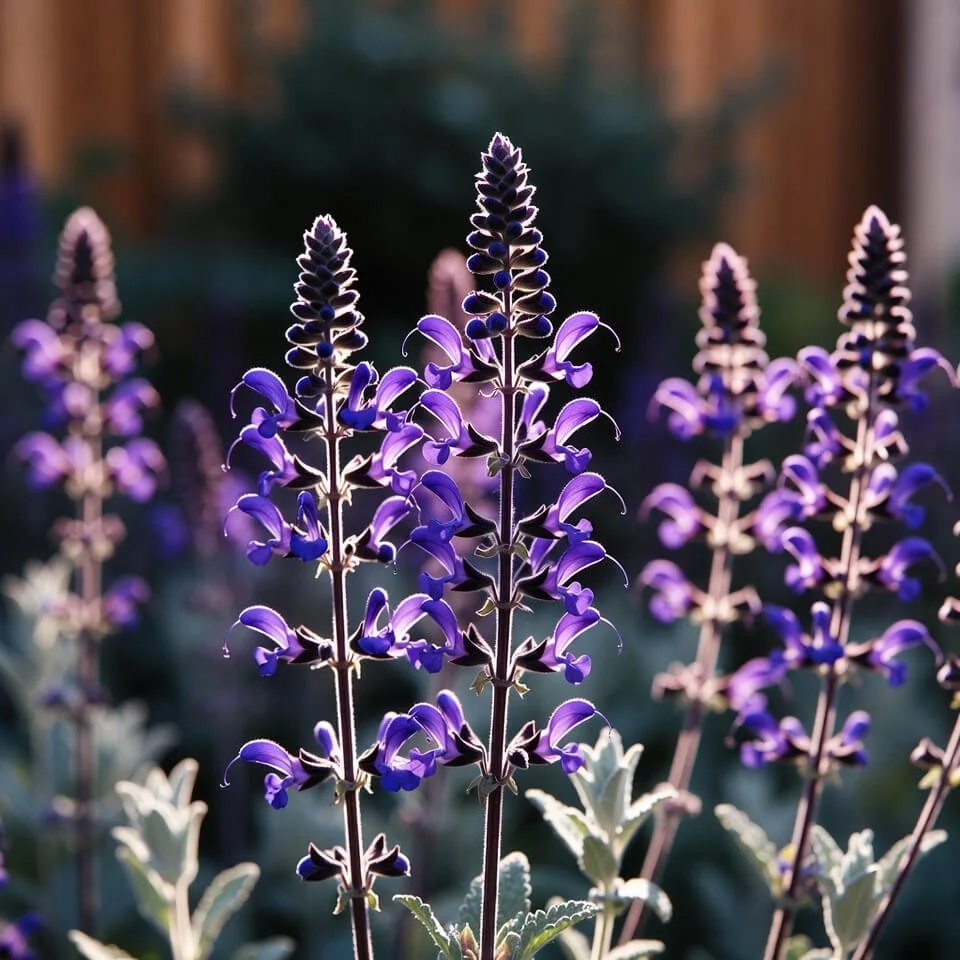
| Salvias | Long flowering, bee friendly spikes. | Spring preferred, early autumn only in free draining soil | Hardy types cope well in sunny, free draining spots. On clay, winter waterlogging can be a common cause of losses. |
| Skimmia japonica | Evergreen foliage with decorative winter buds and red berries on female plants. | Autumn or spring | Prefers sheltered, part shade positions and dislikes winter waterlogging. On alkaline Chiltern chalk it can yellow (chlorosis), so it is happier on neutral to acidic ground or in pots of ericaceous compost. |
Picking up young plants from a good local nursery and letting them fill out over a season or two is the patient route to that full, generous look you see in top borders. It is also the route we recommend to most clients, because a nursery grower who knows local conditions will steer you towards stock that has a real chance on your soil. No need for expensive instant giants.
Clever Design Tricks You Can Borrow from the Pros
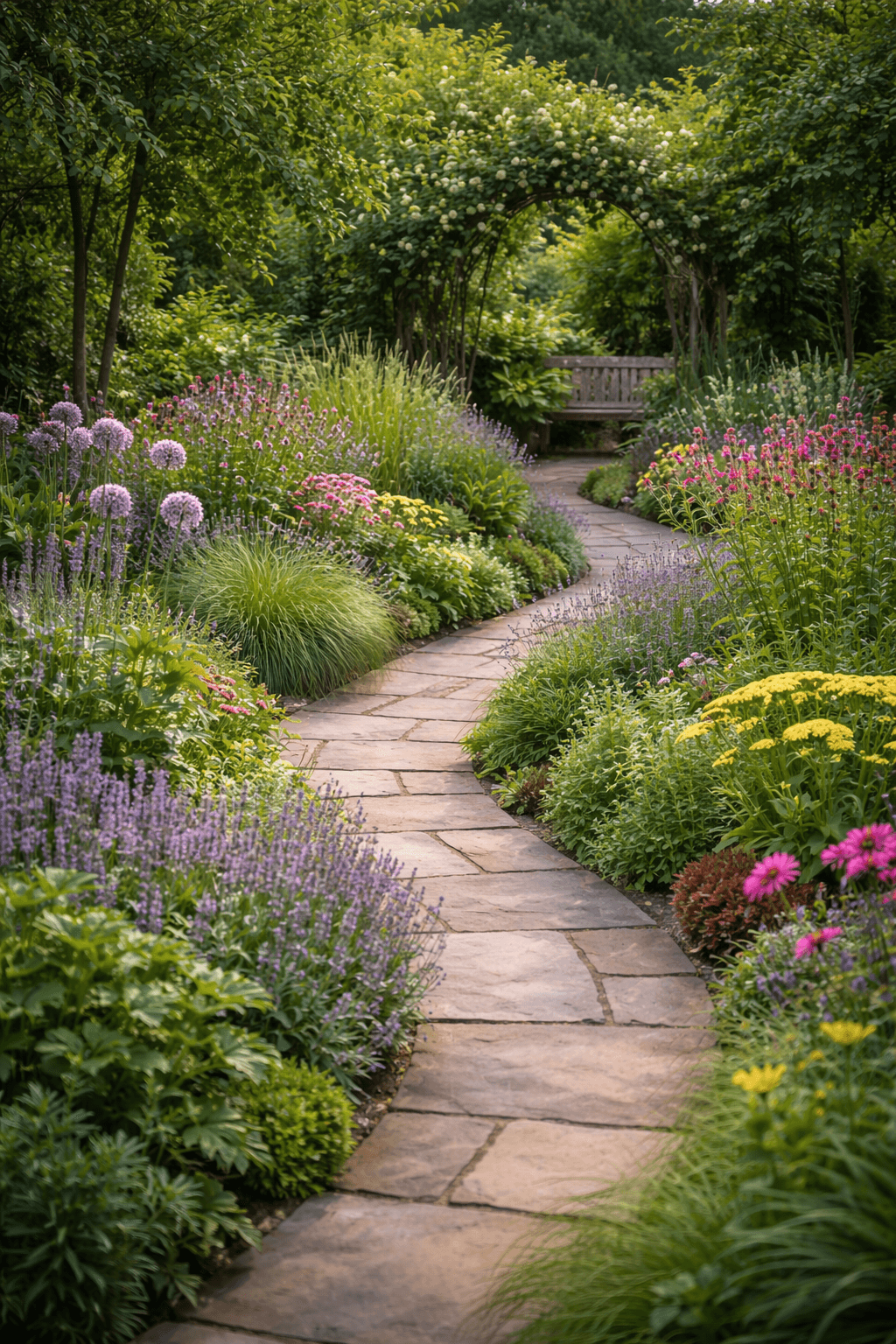

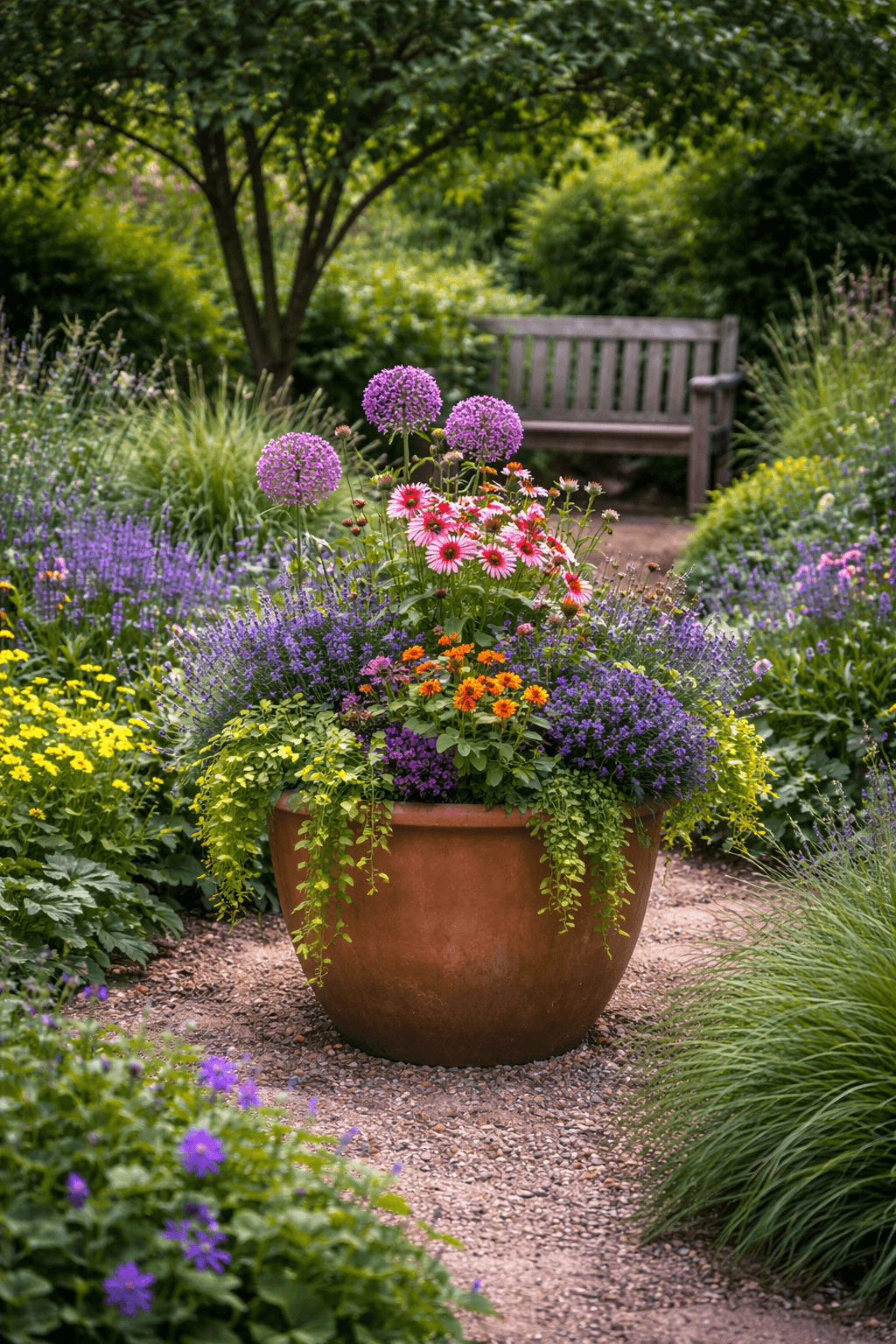
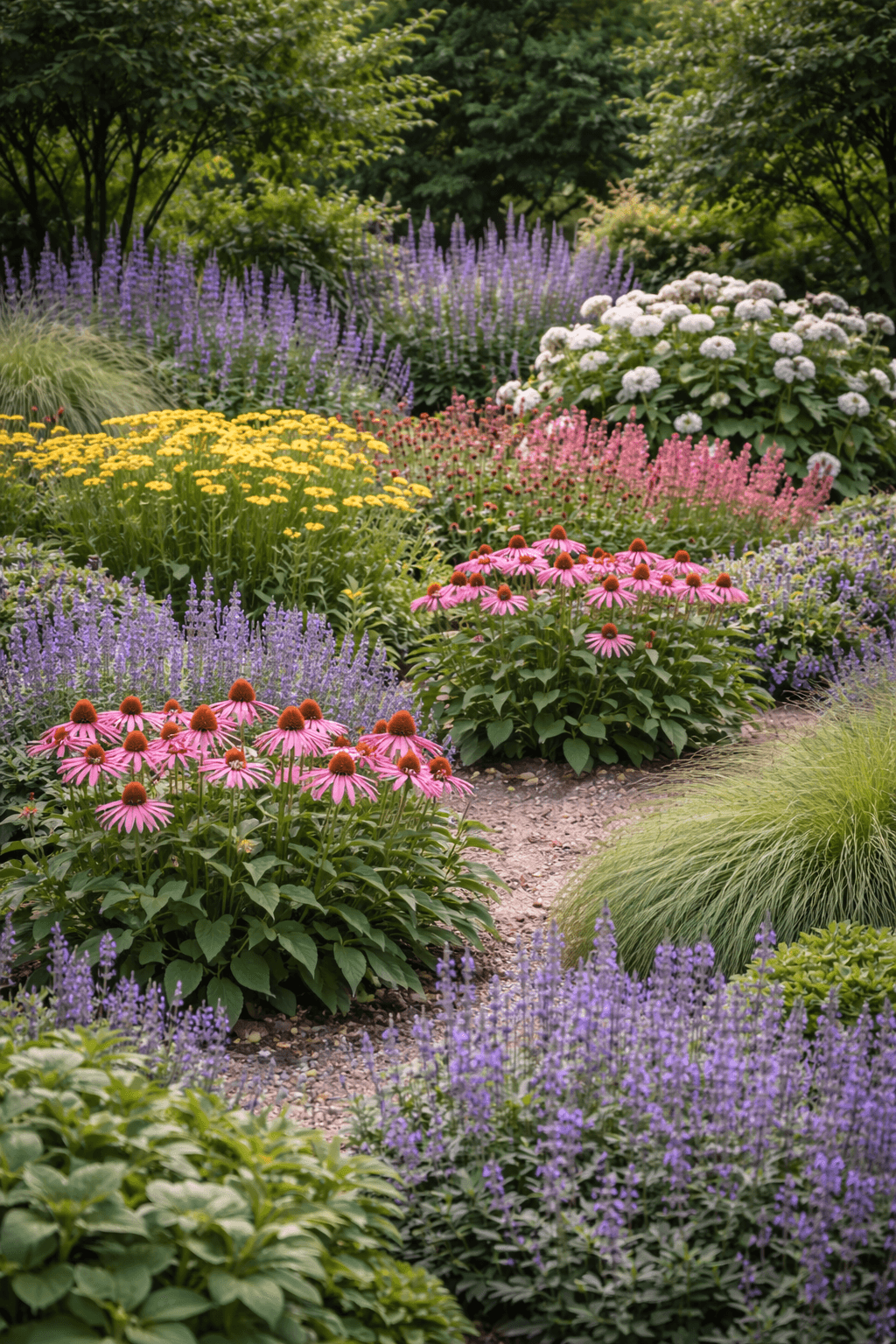
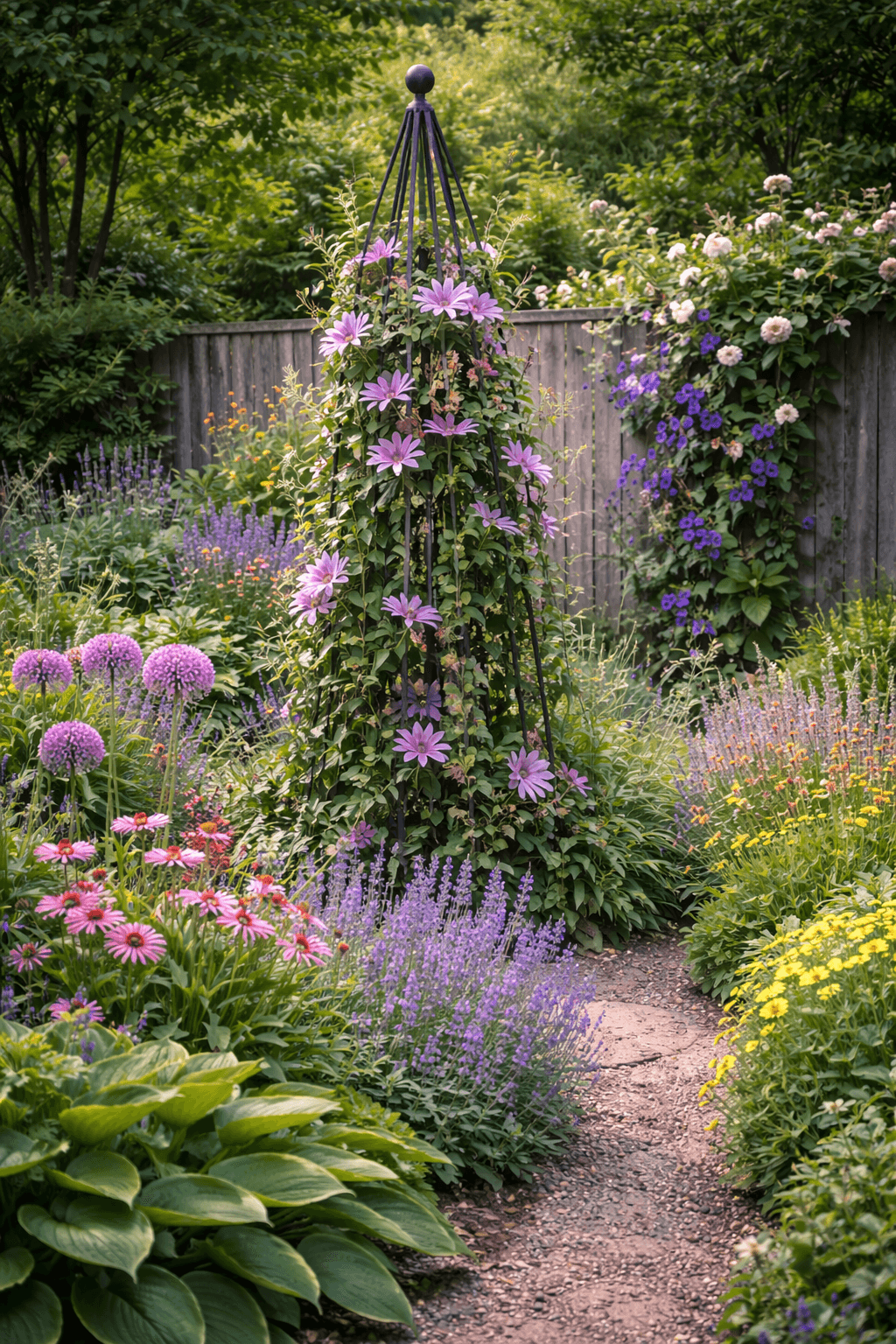
Exhibition designers have a knack for making spaces feel special with surprisingly simple moves. These are a few that tend to have the biggest impact without adding lots of maintenance.
Curving paths
Gentle bends draw you deeper into the plot and can make even modest areas feel more spacious.Layered heights and textures
Start tall at the back and step down gradually to the front. Mix it up with contrasts, like airy grasses against bold allium heads or glossy leaves under delicate blooms.
One strong focal point
A beautifully planted container, quiet bench, or simple sculpture gives the eye a place to land without overwhelming the scene.Thoughtful repetition
Group the same plant in threes, fives, or sevens. It creates cohesion and impact far more effectively than scattering singles everywhere.Vertical interest
Train climbers up obelisks or along walls. It is a straightforward way to soften fences and add a sense of depth.
A common pitfall is using too many different materials at once. If paths and edging are limited to one main finish, planting tends to look calmer and budgets often stretch further.
Keeping Costs Down While Capturing the Magic
Patience offers the greatest savings. Perennials divide readily after a couple of years, providing free material to fill spaces. Smaller pots from trusted growers are often far cheaper than large instant impact plants. Several options, including foxgloves and aquilegias, raise easily from seed, while salvias can take well from cuttings.
For hard elements, choose reclaimed brick for edges or gravel for paths instead of premium paving. Focus any larger spend on a single standout feature, like a birdbath or specimen tree, and rely on plants for the bulk of the effect.
Initial soil work delivers lasting returns. On clay, regular organic matter tends to improve structure over time, and it can help with drainage in many cases. On chalk, a yearly mulch can help with moisture holding and reduce summer stress. Good soil supports stronger growth and reduces the need for replacements.
Jot ideas on paper to nail the layout first time. It avoids those regretful and pricey changes later.
Frequently Asked Questions
Can I really achieve a polished show-garden look on a small budget?
In many cases, yes. A refined show garden feel comes far more from good structure, repetition, and reliable plants than expensive rarities. Everyday perennials establish quickly and create generous borders when grouped thoughtfully and given time to fill out.
Which plants from top exhibitions work best on Buckinghamshire clay soil?
Many Chelsea style favourites cope well with heavier ground once established. Foxgloves, hardy geraniums, geums, hellebores, and robust grasses such as Miscanthus and Calamagrostis are often reliable. Salvias and lupins can succeed in sunny positions with reasonable drainage, but true drought specialists tend to suit chalkier or freer draining areas unless the soil is improved.
When should I start planting for this kind of border?
Autumn is ideal for most planting, allowing roots to settle over winter and drive strong spring growth. Alliums should be planted then, while half hardy or tender salvias are best added in late spring, once the risk of frost has passed, often around May.
Where can I source these plants locally in Buckinghamshire?
A good local nursery can make plant choice much easier, especially for matching plants to light and drainage. Many gardeners use Stotts Nursery for a broad range of hardy perennials and well grown stock.
How do I stop deer and rabbits ruining a new border?
This is one of the most common problems we see on rural and semi-rural plots around the county, particularly gardens that back onto woodland or open fields. The reliable answer is to lean on plants they tend to leave alone, then protect anything vulnerable while it establishes. Alliums, hardy geraniums, hellebores, salvias, and most ornamental grasses are usually low on their menu, while young roses and tulips often need temporary protection in the first season. For a fuller local list, see our guide to deer-resistant plants for rural Buckinghamshire gardens, which covers clay-tolerant picks and simple ways to reduce browsing.
Bring Chelsea Inspiration to Your Buckinghamshire Garden
Turning a garden into something with that refined, year round appeal is really about borrowing proven ideas and making them fit real life. Choose resilient plants, keep design straightforward, and let things develop steadily. Before long, the space starts feeling special every single day.
Need help sourcing these plants or bringing a Chelsea inspired design to your own plot? If it would help to talk it through, share a couple of photos and a rough idea of what you want the space to do, and the next steps usually become clear quickly.